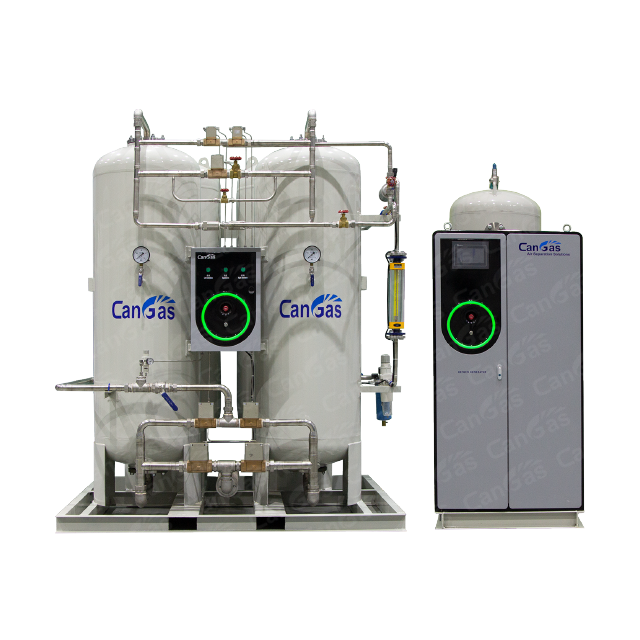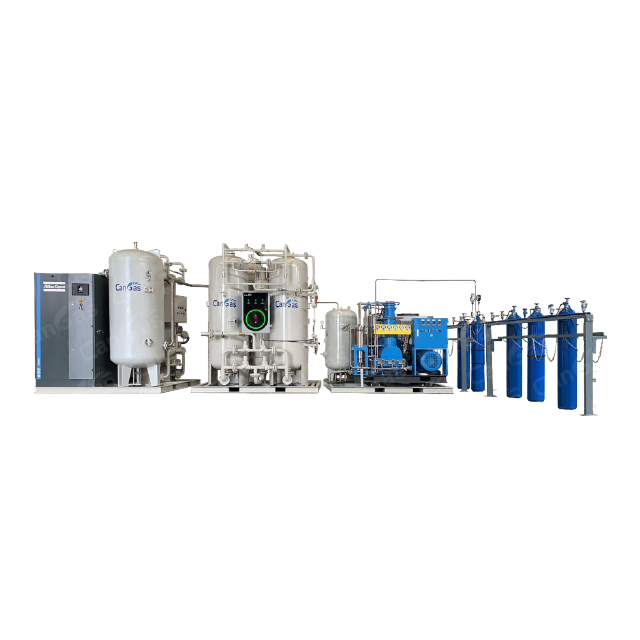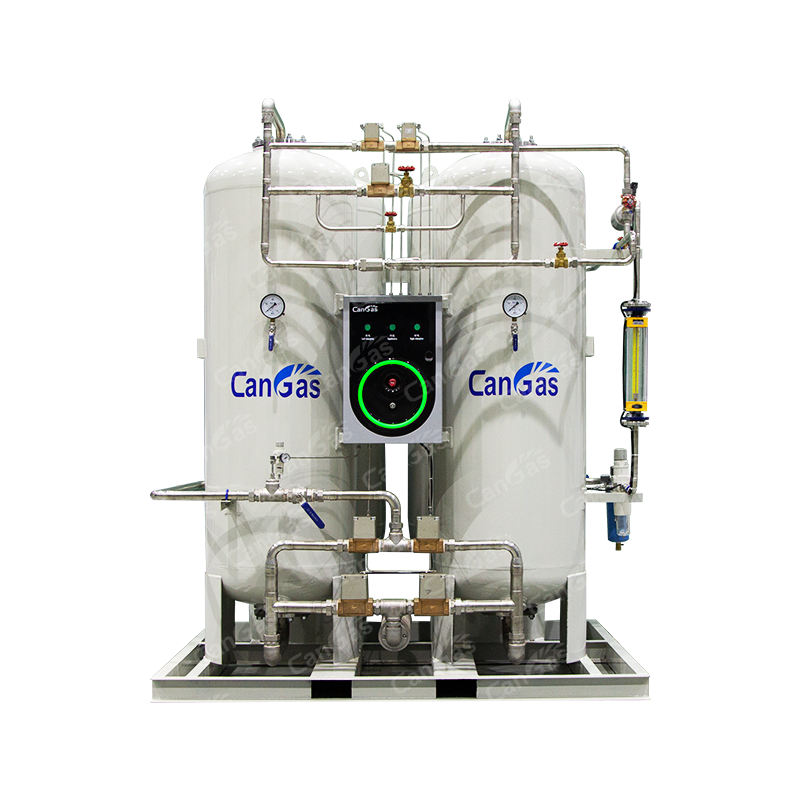


Oxygen plays a critical and multifaceted role in the aviation sector. It not only safeguards life safety during flight but also serves as an indispensable resource for ground operations. Specifically:
I. In-Flight Oxygen Supply
• Individual Oxygen Supply for Pilots: At high altitudes — particularly during cockpit depressurization or high-maneuver flight — pilots rely on oxygen systems to maintain clear consciousness and operational capability. Modern military aircraft use On-Board Oxygen Generation Systems (OBOGS). Working on the Pressure Swing Adsorption (PSA) principle, these systems extract oxygen directly from ambient air for immediate use, delivering a continuous, stable supply of breathable oxygen to meet in-flight requirements.
• Redundant Cockpit Oxygen for Civil Aviation: Certain mainline and regional passenger aircraft are fitted with compact on-board PSA oxygen generation modules. These act as a redundant emergency oxygen source, forming a dual-protection mechanism alongside chemical oxygen systems. This configuration satisfies civil aviation standards that mandate a minimum of two hours of emergency cockpit oxygen supply for depressurization scenarios.
II. Support for Remote or Specialized Airports
• On-Site Oxygen Generation at High-Altitude Airports: Oxygen supply support is available for airports located in thin-air regions, such as Qamdo Bangda Airport in Xizang and high-altitude airports in Xinjiang. Using diffuse-delivery terminals and a building-wide piping network, oxygen-enriched air produced by generation equipment is distributed evenly across departure halls, arrival gates and offices to keep indoor oxygen levels within a comfortable range. This effectively relieves hypoxia-induced physical discomfort in passengers and helps airport staff and construction workers preserve physical fitness and health while on duty. It also enables airport medical rooms and emergency response teams to treat passengers with acute altitude sickness.
• One-Stop Oxygen Supply for Remote, Small-Scale Airports: Oxygen supply services are provided for a variety of facilities, including civil airports, military field airfields and island airports, removing logistical constraints associated with sourcing oxygen from external vendors.
III. Ground-Based Emergency Support
• Airport/Field Emergency Medical Care: Delivers initial ground-based oxygen therapy for passengers or staff who suffer sudden medical distress within airport premises.
• Oxygen Supply for Special Environments: Refills oxygen for ground-based medical and emergency equipment deployed at high-altitude locations, field sites, island/reef airfields or temporary support stations.
Advantages of Choosing a PSA Oxygen Generation System
1. Safety Value
• Autonomous control over the oxygen source eliminates risks tied to purchased oxygen, including purity non-compliance, contamination and waste.
• A stable oxygen supply that meets required standards safeguards flight safety.
• Highly automated oxygen filling systems reduce accident risks.
• Safer than high-pressure or cryogenic oxygen sources.
2. Efficiency Value
• Continuous, stable oxygen production and supply shorten response times for pre-flight support.
• Mobile trailers enable direct apron-side filling, minimizing cylinder handling and waiting time.
• Compatible with high-frequency flight schedules and continuous takeoff and landing operations for military aircraft.
• Fewer moving parts translate to high system reliability and ease of maintenance.
3. Cost Value
• Ambient air serves as the raw material; long-term operating costs are lower than purchasing liquid oxygen or gas cylinders.
• Eliminates expenses for transportation, storage, testing and round-trip refilling logistics.
• Vehicle-mounted self-power generation removes dependence on the airport power grid.
4. Operational and Strategic Value
• Enables independent support capabilities for high-altitude, field and remote airfields.
• Ambient-temperature oxygen generation produces no cryogenic losses or emissions, making it environmentally friendly and low-carbon.
• Meets civil aviation airworthiness standards and military requirements for high-purity oxygen (93% – 99.5%).
Decision-Making
Selecting an oxygen generation system for aviation applications is a complex decision that requires a holistic balance of technology, regulatory compliance, economics and operational support requirements. Unlike standard industrial oxygen needs, aviation oxygen applications impose extremely strict requirements on safety, reliability and airworthiness.
The following workflow outlines the evaluation process for aviation oxygen generation systems: Determine the technical approach and product type based on the application scenario → Screen products that comply with airworthiness regulations and standards → Conduct comparative analysis of core performance and lifecycle costs → Evaluate the supplier’s capacity to provide ongoing after-sales service.