

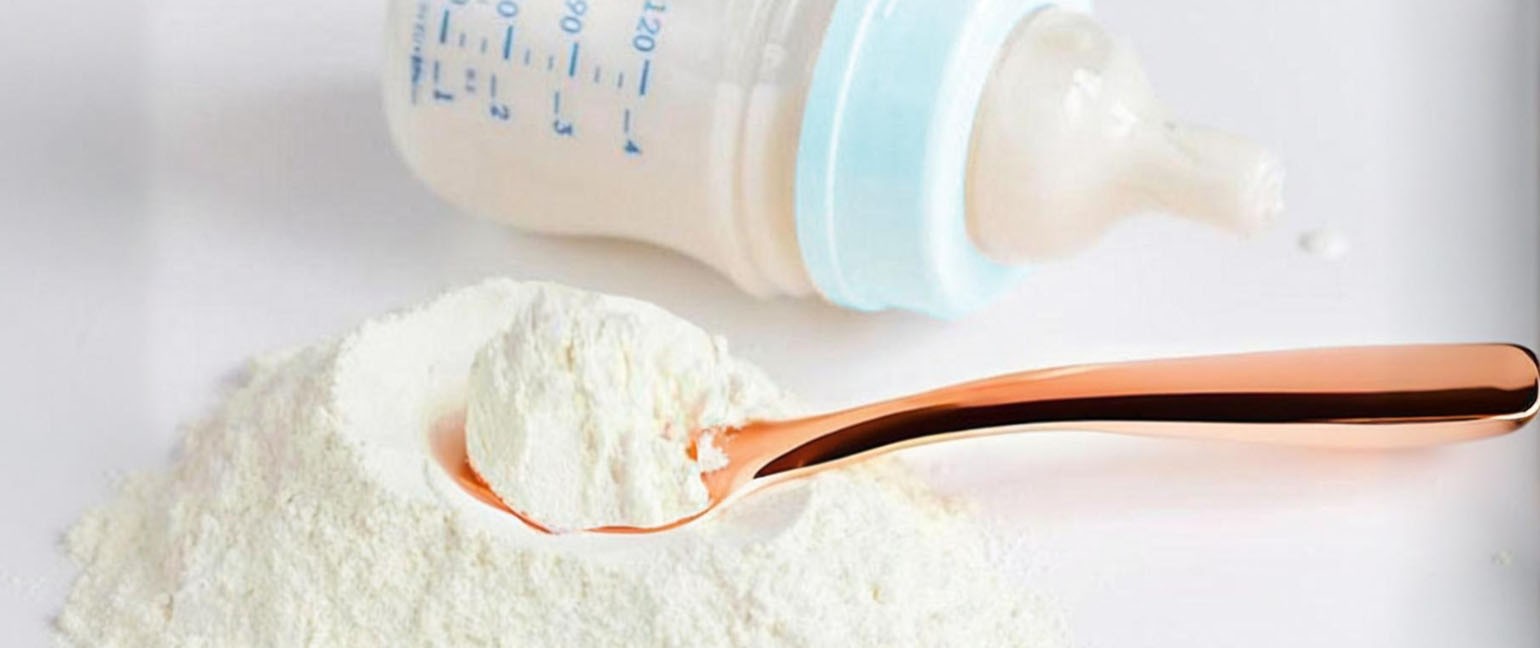
As an inert gas — colorless, odorless, non-toxic and chemically stable — nitrogen acts as a "guardian of freshness" across several critical stages of infant formula production. It prevents oxidation, inhibits microbial growth and preserves nutritional value. Its specific applications throughout the production process are as follows:
I. Raw Milk Pre-treatment
After raw milk passes quality screening, nitrogen blanketing is applied to storage tanks. This effectively isolates milk from air, minimises oxidation of the small amount of fat present in raw milk, and preserves its naturally active nutrients.
II. Drying Stage (Powder Formation)
After being concentrated in an evaporator, milk is fed into a drying tower (operating at approximately 200°C) to remove moisture and form powder. This stage requires a sterile, low-oxygen environment throughout, where nitrogen serves the following purposes:
1.Creating a low-oxygen, dry environment to prevent oxidative degradation of proteins, fats and vitamins (especially heat-sensitive nutrients such as Vitamin A and DHA) caused by oxygen contact during high-temperature drying, thereby maximising retention of nutrient activity;
2.Assisting powder formation. It reduces oxidation-induced adhesion and clumping of milk particles during drying, ensuring uniform, fine particles with good reconstitution properties. It also prevents material waste and environmental pollution from airborne dust.
III. Nutrient Blending Stage (Pre-treatment of Finished Product)
Following spray drying, unstable nutrients such as DHA, probiotics and lactoferrin are added to the milk powder and thoroughly blended. Nitrogen’s core function at this stage is: Displacing air within blending equipment to prevent newly added heat-sensitive, oxidation-prone nutrients from undergoing oxidative degradation during mixing. This addresses the widespread industry challenge of nutrient retention after high-temperature processing.
IV. Packaging Stage (Core Application Scenario; Key to Preserving Freshness)
Packaging is the critical stage for maintaining infant formula freshness. Nitrogen-flushed packaging has become a widely adopted, mature preservation technique, consisting of two specific steps:
1.Can Pre-treatment: After UV sterilisation, empty cans are purged with nitrogen to remove residual air and moisture. This prevents formula from absorbing moisture, spoiling or developing microbial growth once filled;
2.Vacuum Nitrogen-Flushing and Sealing: An integrated "vacuuming – nitrogen flushing – sealing" process is used. Air is first evacuated from the can to create a vacuum, followed by injection of high-purity nitrogen to establish a slight positive pressure environment before immediate sealing.
V. Storage and Transportation Stage (Extended Protection; Ensuring End-Product Quality)
As infant formula travels from production facilities to retail outlets nationwide, it may undergo prolonged storage and transshipment across various regions. The core value of nitrogen protection in this phase is: Maintaining a slight positive pressure nitrogen environment inside cans to continuously block external air and moisture. This ensures that minor vibrations or temperature fluctuations during transport do not compromise formula quality, preserving freshness, nutrient activity and safety until the product reaches consumers. Provided the container remains unopened, formula quality stays stable and compliant throughout its 18–24 month shelf life.
Additional Note
Nitrogen used in infant formula production is food-grade and complies with GB2760. It is classified as a processing aid with "no limit on residual quantity". It is non-toxic, odourless and poses no adverse effects on the human body, protecting infants’ safety and nutritional intake.
Benefits of Using a PSA Nitrogen Generator as the Nitrogen Source
I. Continuous, on-demand nitrogen generation ensures uninterrupted production
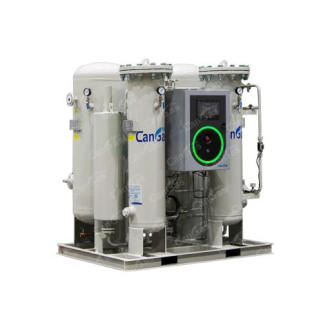
Infant formula production relies on continuous assembly-line operations, requiring high stability and reliability of nitrogen supply. PSA nitrogen generators effectively resolve pain points associated with traditional liquid nitrogen supply, namely dependence on transportation and the risk of supply disruption: PSA nitrogen generation systems adopt a dual-adsorption tower design operating in cyclic alternation. Through pressurised adsorption and depressurised desorption, they enable continuous operation and deliver a stable nitrogen supply 24 hours a day.
The equipment features a high degree of automation and requires no on-site operators. Users can remotely monitor key operating parameters, minimising supply interruption risks caused by human factors.
II. Compliance with Safety and Cleanliness Standards; Meeting High Safety Requirements for Infant and Toddler Food
Compared with ordinary food products, infant formula imposes stricter cleanliness and safety requirements for production environments and auxiliary materials. The operating specifications of PSA nitrogen generators align with food-grade production requirements, eliminating potential contamination risks at the source:
• Compliance with Cleanliness Standards: The equipment is fitted with a multi-stage filtration system that effectively removes moisture, oil and solid impurities from nitrogen. It maintains a nitrogen dew point below -40°C and oil content ≤0.01 ppm. The output nitrogen is dry, clean, odourless and impurity-free, preventing contamination of formula ingredients and avoiding issues such as moisture absorption, spoilage or off-flavours originating from impurities in the gas source. Internal piping is made of 304 stainless steel to further eliminate pipeline contamination and meet food production cleanliness requirements.
• Safe and Low-Risk: Nitrogen is generated via a physical process without chemical reagents. The process discharges no toxic or harmful gases and produces no waste, making it an eco-friendly solution. Unlike liquid nitrogen storage and transport, which carry hazards such as leakage and frostbite, PSA nitrogen generators are installed on-site to produce gas. They remove the need for high-pressure storage vessels and associated leakage risks. Furthermore, the system is equipped with an automatic fault alarm for real-time operational monitoring and rapid anomaly detection. This ensures full safety at production sites while cutting safety management costs.