
Key Design Considerations for Air Buffer Tanks in PSA Nitrogen Generation Systems
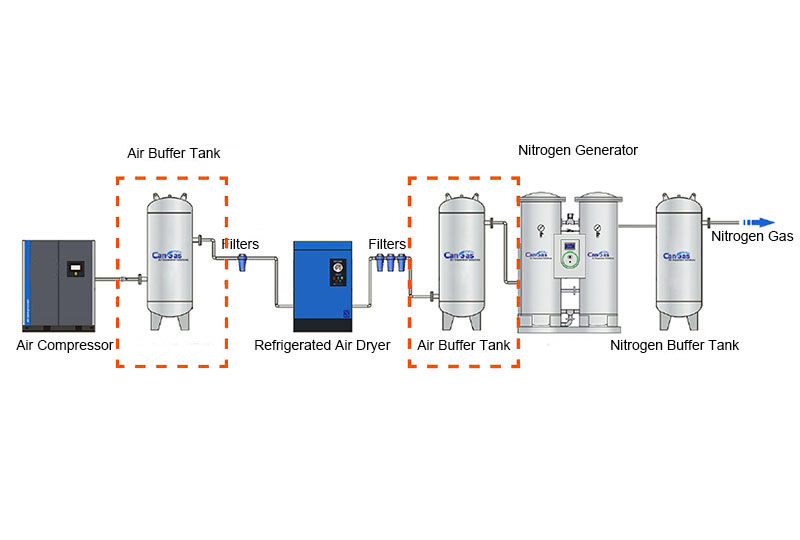
In PSA nitrogen generation systems, installing an air buffer tank downstream of the compressor is highly recommended. This protects the air compressor, ensures stable compressed air pressure, and keeps the compressor's load/unload cycles within an optimal range. The air buffer tank offers two primary advantages: it allows the equipment to continue operating even if the compressor shuts down, and it helps the system cope with sudden surges in air demand.
Determining the appropriate size of the air buffer tank requires professional expertise; scientific design is essential for maximum safety, efficiency, and practicality.
How to Determine the Tank Size
Air buffer tanks come in a wide variety of sizes. To ensure the tank's capacity is optimally matched to actual air demand, several key factors must be considered:
1. Air Compressor Output The volume of the air buffer tank must match the output capacity of the air compressor. Specifically, a compressor with a high flow rate requires a correspondingly larger buffer tank to store sufficient compressed air, thereby accommodating pressure fluctuations and flow variations more effectively.
2. Peak Demand Calculate the peak air consumption based on specific operational requirements. Ensure the buffer tank has sufficient capacity to store enough compressed air to meet these peak demand periods.
3. Airflow Stability If the system experiences significant airflow fluctuations, a larger buffer tank is necessary to effectively absorb and dampen these variations, thereby maintaining system stability.
4. Required Operating Pressure The pressure required at the point of use directly influences the compressor's load and unload cycles. High pressure requirements can lead to more frequent cycling, resulting in greater pressure fluctuations within the buffer tank; this necessitates a corresponding increase in tank volume.
5. Piping Diameter The diameter of the system piping directly affects flow velocity and pressure loss. If the piping diameter is too small, it increases flow resistance and pressure drop, compromising pressure stability within the air buffer tank. Therefore, piping dimensions must be considered when sizing the buffer tank to ensure it can effectively balance pressure fluctuations.
Summary Selecting the appropriate size for an air buffer tank requires a comprehensive assessment of the air compressor's output capacity, flow rate, operating pressure, and piping dimensions. Proper sizing ensures the efficient and stable operation of the PSA nitrogen generation system.