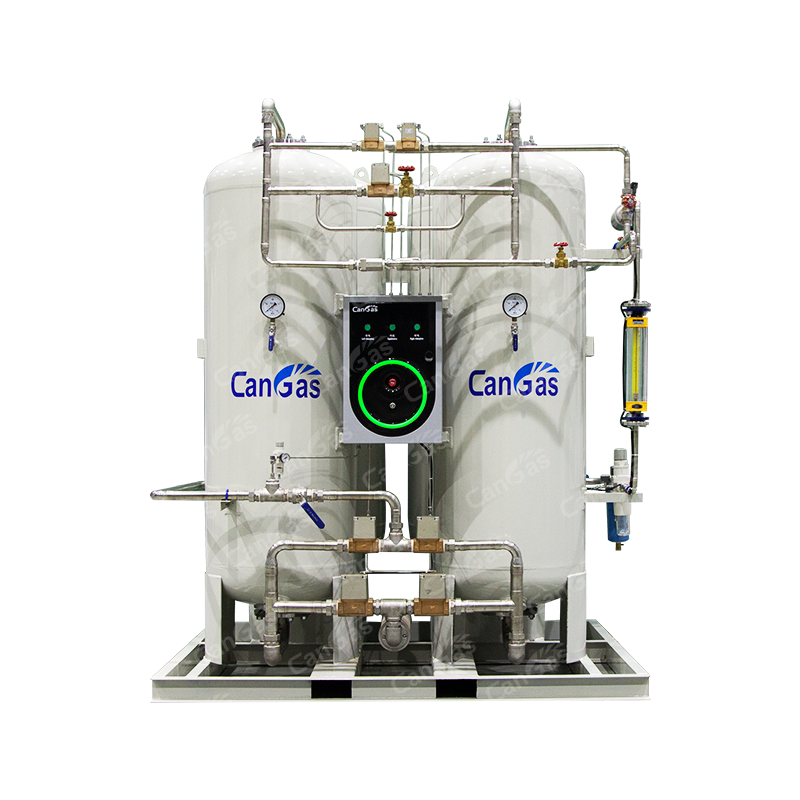

Why Does the Oxygen Concentration in Pressure Swing Adsorption (PSA) Oxygen Generation Not Exceed 96%
Although Pressure Swing Adsorption (PSA) oxygen generation technology offers significant advantages in terms of energy consumption, cost, and operational flexibility, achieving an oxygen concentration above 96% remains a challenge. This limitation stems primarily from the following technical difficulties and process characteristics:
I. Limitations in Adsorbent Selectivity
Adsorption Characteristics of Molecular Sieves:
The zeolite or lithium-based molecular sieves used in PSA oxygen generation preferentially adsorb nitrogen. Oxygen, having weaker polarity, is left behind and separated as the non-adsorbed component. However, molecular sieves cannot achieve 100% nitrogen adsorption; consequently, the resulting oxygen purity typically falls within the 93–96% range.
The Presence of Argon:
Atmospheric air contains approximately 0.93% argon. Since argon's molecular properties closely resemble those of oxygen (both are non-polar molecules), current molecular sieves are unable to effectively separate argon. As a result, the product stream from PSA oxygen generation retains residual argon-along with small amounts of unadsorbed nitrogen-which limits the achievable purity level.
II. Constraints Imposed by Process Design and Operating Conditions
Trade-off Between Adsorption Pressure and Time:
The PSA process requires rapid pressure cycling to facilitate quick adsorption and desorption within a short timeframe. Attempting to increase purity by extending the adsorption duration leads to a decline in the saturation efficiency of the molecular sieves, thereby compromising separation performance. Conversely, trying to boost purity by raising adsorption pressure may accelerate the pulverization of the molecular sieves and result in higher energy consumption.
Complexity of Multi-Tower Parallel Configurations:
While increasing the number of adsorption towers (e.g., using a six-bed process) can theoretically enhance purity through multi-stage adsorption, doing so significantly increases system complexity, valve switching frequency, and energy consumption.
Trade-off Between Energy Consumption and Purity:
Specific energy consumption per unit of pure oxygen produced is a critical performance metric for PSA technology. When the target oxygen purity exceeds 96%, the process requires additional adsorption towers or extended regeneration cycles, both of which lead to a substantial increase in energy consumption.
III. Technical Bottlenecks and Material Limitations
Limitations in Adsorbent Performance:
The nitrogen adsorption capacity and selectivity of existing molecular sieves are currently approaching their theoretical limits. Furthermore, current lithium-based molecular sieves have yet to overcome the technical barrier of effective argon separation.
Equipment Reliability and Service Life:
The long-term stability of the molecular sieves themselves, along with the reliability of the high-frequency switching valves, constitutes a critical factor in the overall performance and longevity of a PSA system. Achieving higher purity levels necessitates more frequent valve cycling and more stringent adsorption conditions; this can potentially compromise equipment lifespan and increase maintenance costs.
IV. Divergent Requirements Across Application Scenarios
Industry Tolerance for Purity Levels:
With the exception of medical-grade oxygen, most oxygen-consuming applications-such as oxygen enrichment in blast furnaces or electric arc furnace steelmaking-do not require oxygen purity exceeding 93%. In fact, 93% pure oxygen is sufficient to satisfy the vast majority of market demands.
Economic Considerations:
Given the limited market demand for ultra-high-purity oxygen, most manufacturers of PSA oxygen generation systems prioritize optimizing energy efficiency within the standard purity range, rather than pursuing the absolute limits of purity.
Future Directions for Innovation
· Research and development of novel adsorbent materials
· Process optimization and intelligent control systems
· Integration of cryogenic and pressure swing adsorption technologies
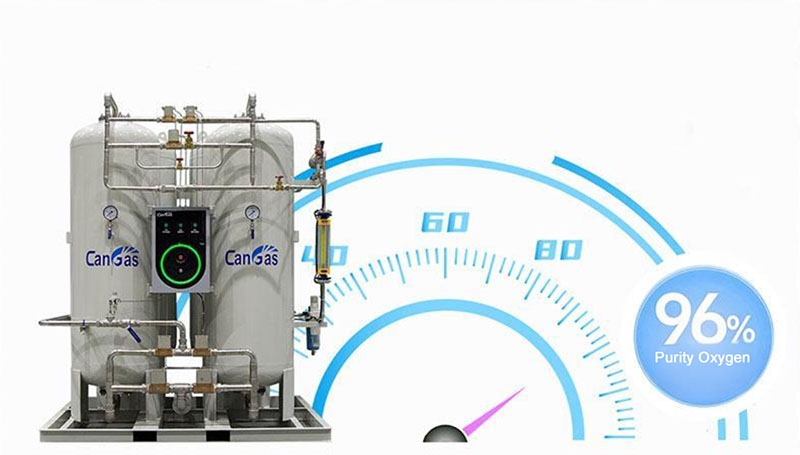
In summary, the fact that PSA oxygen generation systems typically do not yield product oxygen concentrations reaching 96% results from the combined interplay of current adsorbent properties, process design constraints, economic viability, and specific application requirements.
However, 96% purity does not represent the ultimate limit of PSA air separation technology. Currently, some manufacturers incorporate downstream purification units to further refine the product oxygen, thereby enabling the production of 99.5% pure oxygen via the PSA method; this capability serves to meet the demands of applications requiring higher purity levels.