
Refined Medical Gas Supply System: Engineering Practice of the Medical Gas System at a Domestic Maternal and Child Health Hospital
Project Background and Significance
A centralized medical‑gas supply and management system serves as a critical life‑support system for hospitals. It maintains the lives of critically ill patients, alleviates patient suffering, facilitates patient recovery, improves the medical environment, and powers a wide range of medical devices and tools.
Standardized, well‑regulated medical‑gas engineering construction not only lays the cornerstone for a safe and reliable clinical environment, but also delivers substantial livelihood‑guarantee value and social benefits.
Hospital Overview
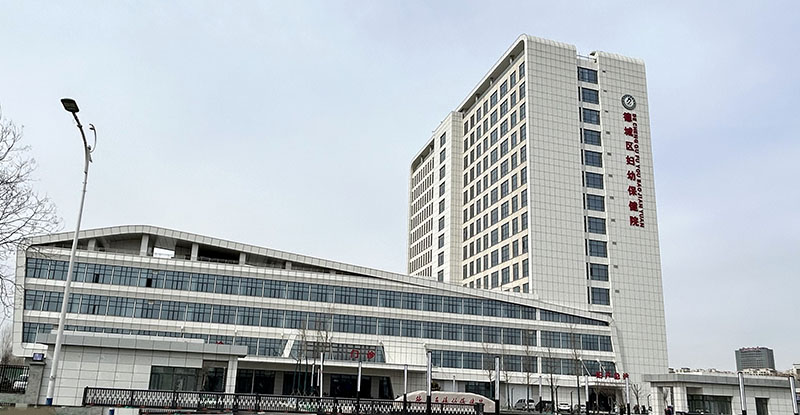
Dezhou Decheng District Maternal and Child Health Hospital was founded in 1953, with an annual outpatient volume exceeding 100,000 visits. It undertakes more than 10 maternal‑and‑child public health service projects, including preconception health check‑ups and prenatal screenings. To better address the health needs of women and children, the hospital adopted a large‑department management model starting in 2016. Upholding the concept of full‑life‑cycle services, it has gradually built a three‑pronged service framework covering gynecology, obstetrics and pediatrics, laying a solid foundation for the development of local maternal‑and‑child health services.
Project Overview
This project covers the complete medical‑gas system construction for the West Campus of Dezhou Decheng District Maternal and Child Health Hospital. Adopting scientifically rigorous overall design, the project encompasses core gas sources, transmission pipeline networks, terminal equipment, and a centralized monitoring and alarm system to fully ensure safe and stable clinical gas supply across the hospital.
1. Medical Oxygen System
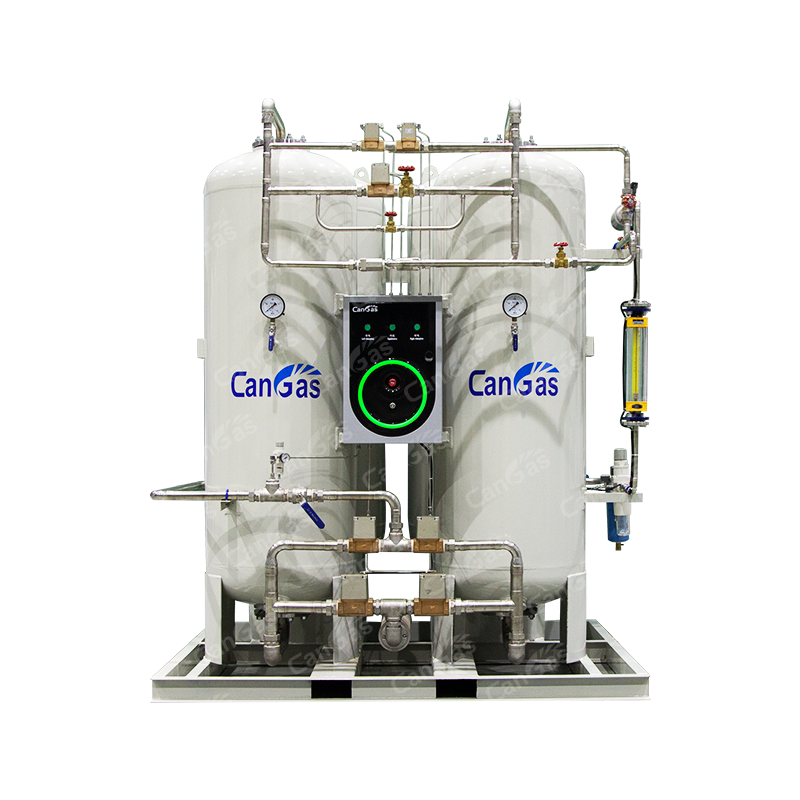
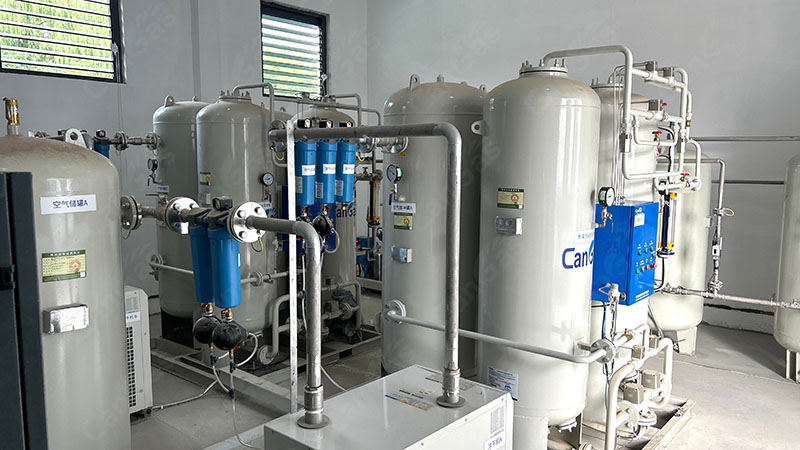
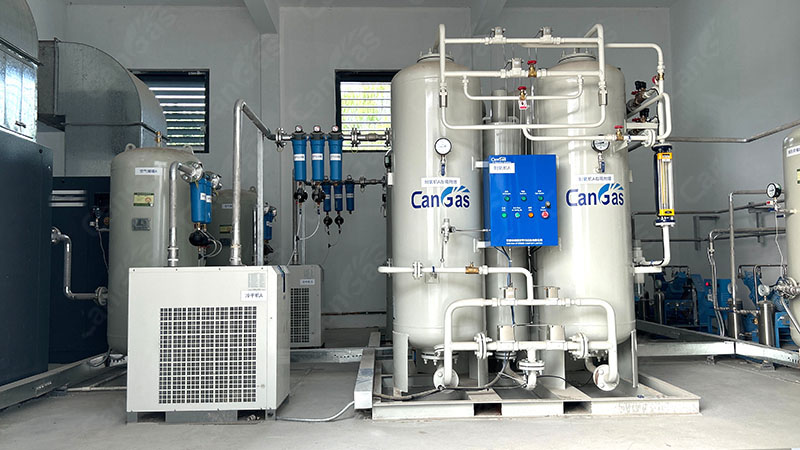
The central oxygen‑supply system consists of air compressors, refrigerated dryers, filters, medical oxygen generators, storage tanks, a central control system, pipelines, and gas terminals.
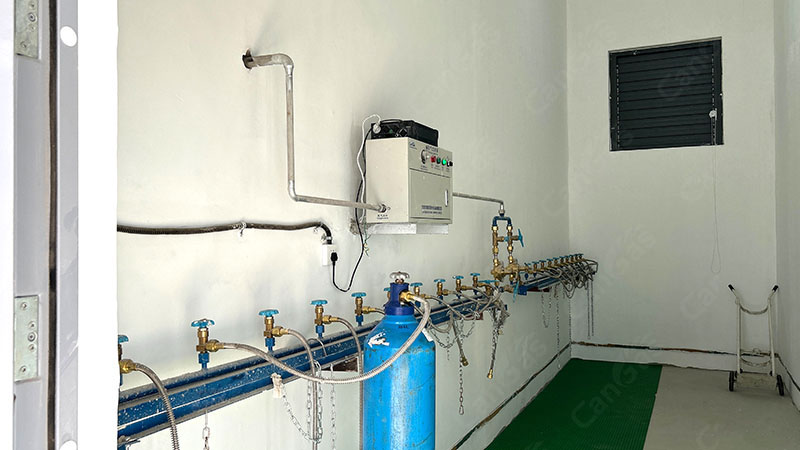
Two medical oxygen generators constitute the primary central oxygen source. A 10+10 cylinder‑bank oxygen manifold acts as the emergency backup gas source to guarantee continuous, stable gas supply for all life‑support zones.
2. Medical Central Suction System
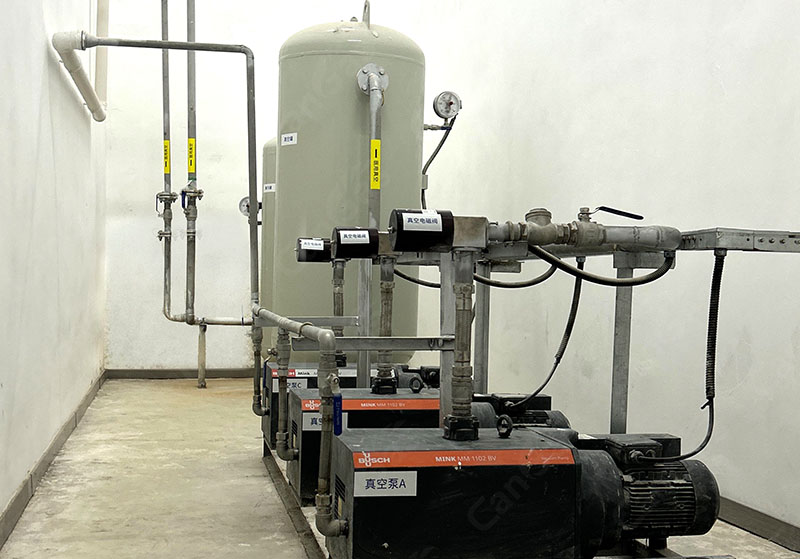
The medical central suction system comprises vacuum pumps, a central control system, network alarm units, filters, and pipelines. Configured for two operational units plus one standby unit, the system is fitted with anti‑backflow devices that prevent vacuum back‑flow into idle vacuum pumps. It supports a peak flow rate of 220 standard cubic meters per hour.
3. Medical Compressed‑Air Units
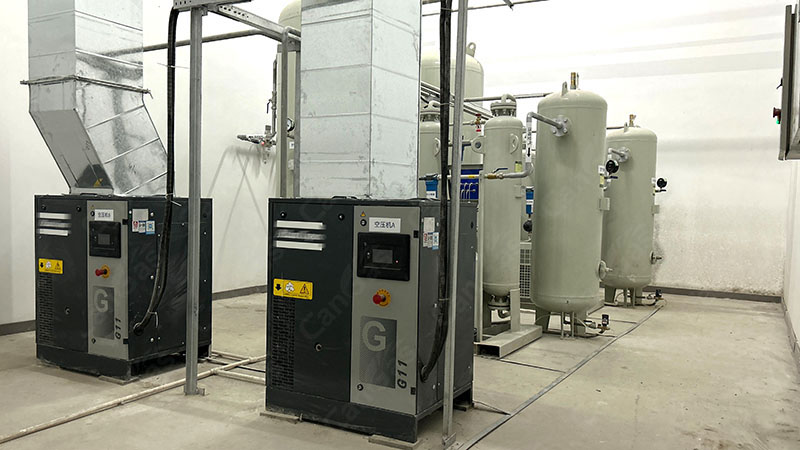
The medical compressed‑air system includes air compressors, dryers, filters, a central control system, alarm units, pipelines and air storage tanks. The medical air units run in a one‑operational‑one‑standby configuration and can accommodate a peak medical‑air flow rate of 100 standard cubic meters per hour. Micro‑oil screw compressors are deployed, keeping the oil content of output compressed air below 0.003 ppm to ensure high‑quality gas purity for clinical use.
4. Gas Piping System
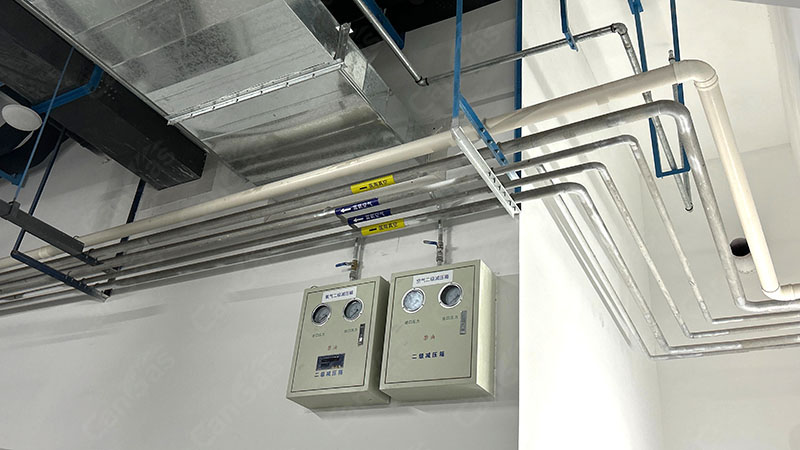
The project features over 300 oxygen terminals, more than 300 suction terminals, and over 20 medical‑air terminals. Characterized by high gas consumption, large quantities of terminals, and wide‑spread distribution, the medical‑gas pipeline installation poses relatively high construction complexity. After pipeline installation is completed, the system undergoes purging, pressure testing and air‑tightness testing to verify the safety and reliability of the medical‑gas piping network.
5. Gas Terminal Equipment
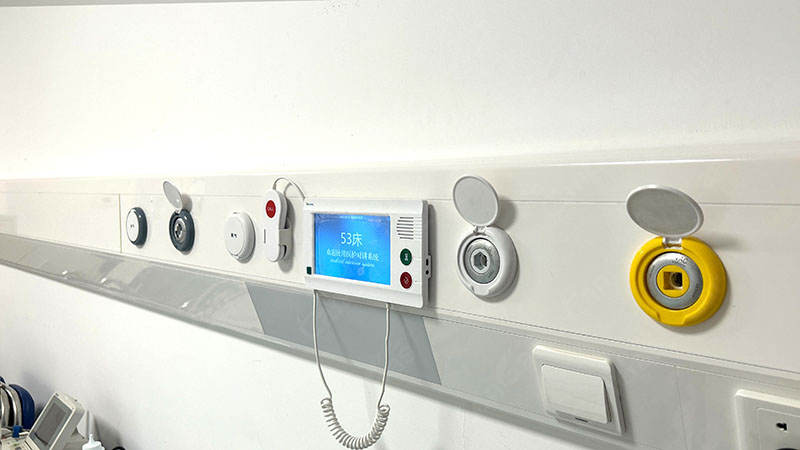
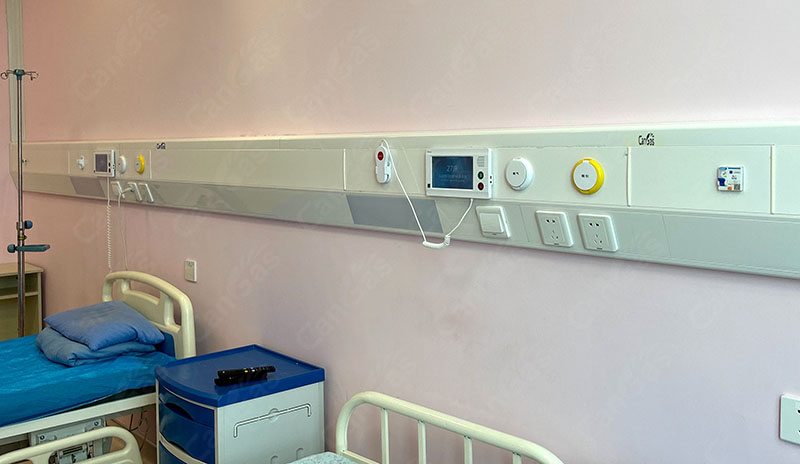
National‑standard three‑chamber service units are selected for bedside wall‑mounted installation. Their physical configuration and functional performance satisfy design and clinical requirements, delivering easy operation, low maintenance frequency and long service life. Safety performance complies with requirements specified in standard YY0801.1.
6. Medical‑Gas System Monitoring and Alarm
A centralized monitoring and alarm system is deployed for unified system management. Alarm units adopt high‑precision, high‑reliability sensors equipped with self‑diagnostic capabilities, which can identify sensor‑level faults and reduce false‑alarm occurrences.
All alarm devices are marked with Chinese labels that clearly state their monitoring parameters and corresponding monitored zones.
Key functions of the monitoring and alarm system include (but are not limited to): pressure monitoring for medical‑gas pipelines within patient care areas, equipment fault alarms, carbon‑monoxide concentration alarms, oxygen‑supply flow alarms, and low‑reserve alarms for emergency backup gas supplies.
Project On‑site Photos
Project Value and Achievements
The successful deployment of the CAN GAS medical‑gas system supports Dezhou Decheng District Maternal and Child Health Hospital in realizing standardized management, standardized operation and refined maintenance of its gas infrastructure. The solution effectively reduces the hospital’s long‑term operating costs, markedly improves operational efficiency and gas‑supply safety, mitigates risks associated with medical services, and helps the hospital achieve its development objectives for enhanced medical quality and service standards.