
Nitrogen in Lithium-Ion Battery Material Production: Roles, Benefits and Selection Criteria for PSA Nitrogen Generators
Driven by the growth and widespread adoption of new energy vehicles, the lithium-ion battery industry has entered a period of rapid expansion. Broad deployment of lithium-ion batteries not only cuts exhaust emissions substantially and improves urban air quality, but also accelerates the shift from fossil fuels to renewable energy, supporting progress toward the “dual carbon” targets of carbon peaking and carbon neutrality.
Lithium-ion battery manufacturing is a sophisticated, high-precision production process. Even trace impurities, moisture or dust can compromise battery safety, service life and capacity. For this reason, production must take place within an ultra-clean, dry and automated environment. Nitrogen plays a vital role in safeguarding the quality and safety of lithium-ion batteries.
I. Core Roles of Nitrogen in Lithium-Ion Battery Material Production
Nitrogen is required at multiple stages of lithium-ion battery manufacturing, including material synthesis, cell fabrication and battery recycling. This article focuses specifically on the material production phase.
Manufacturing lithium-ion battery materials requires an extremely high-quality inert atmosphere. Nitrogen is the preferred inert shielding gas thanks to its excellent chemical stability, ability to satisfy all technical specifications, and superior cost-performance. It delivers critical protection across the four key processes below:
• Sintering of Cathode Materials Cathode materials (such as lithium iron phosphate and ternary materials) are sintered at high temperatures, generally ranging from 800°C to 1200°C. Nitrogen remains chemically inert to these materials within this temperature window. By displacing ambient air, it effectively prevents oxidation, discoloration and structural degradation, preserving the battery’s charge-discharge performance and long-term stability.
• Graphitization of Anode Materials Anode materials, predominantly graphite, are highly flammable. Exposure to oxygen during high-temperature processing carries a risk of combustion, which would result in material loss and major safety hazards. Maintaining a nitrogen inert atmosphere enables smooth graphitization and improves the purity and safety of anode materials.
• Production and Storage of Electrolytes Electrolytes are highly moisture- and oxygen-sensitive. Contact with either will trigger decomposition and render them ineffective. In sealed storage tanks and reaction vessels, nitrogen blanketing at positive pressure isolates the electrolyte from ambient moisture and oxygen, maintaining high purity and stability. Nitrogen acts as a protective barrier throughout storage, filling and reaction steps.
• Material Drying and Mixing Powdered raw materials readily absorb moisture or oxidize during drying and mixing. This would raise the internal resistance and degrade the performance of finished batteries. Nitrogen creates a dry, clean inert environment to guarantee uniform, consistent powder blends.
II. Advantages of PSA Nitrogen Generators
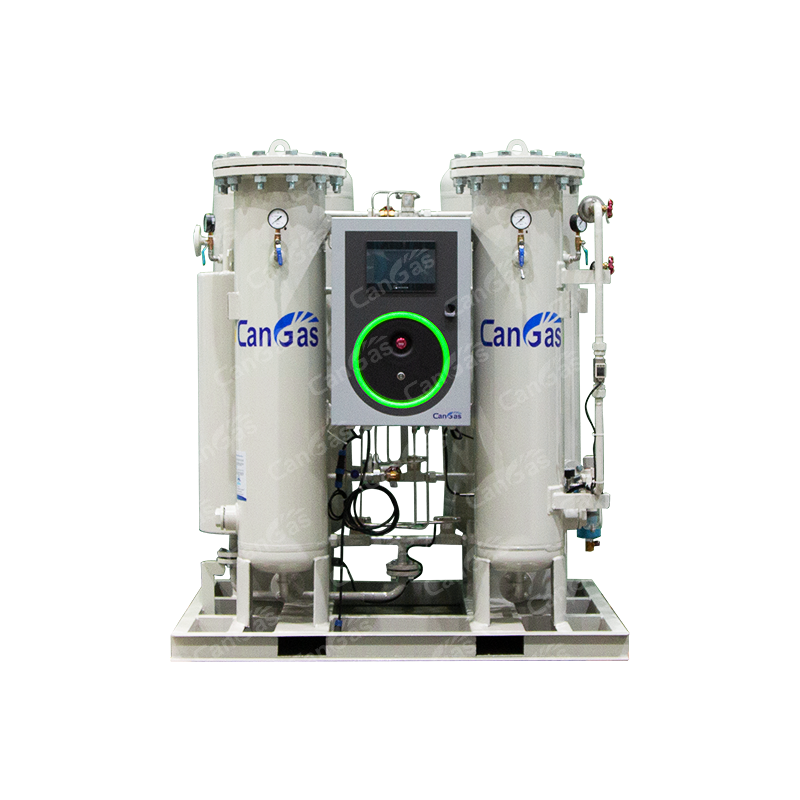
Lithium-ion battery material production demands high-grade nitrogen. Compared with traditional nitrogen supply modes such as liquid nitrogen and high-pressure nitrogen cylinders, PSA (Pressure Swing Adsorption) nitrogen generators offer distinct benefits:
• Significant cost savings: On-site nitrogen generation only requires electricity. It eliminates liquid nitrogen transport and tanker scheduling delays, delivering lower long-term operating costs.
• Clean, stable and safe supply: Oil-free configurations combined with low-dew-point treatment deliver a steady stream of high-purity, contaminant-free nitrogen.
• Reliable continuous output: Systems run 24/7 with low failure rates. Nitrogen is generated on demand, removing risks of transport incidents or supply outages and keeping production lines running uninterrupted.
• High automation: Modern PSA nitrogen generation units are intuitive to operate and highly automated. They support remote monitoring and require minimal on-site attendance.
III. Selection Guidelines for PSA Nitrogen Generation Equipment
Proper equipment selection directly affects nitrogen quality and the overall gas operating cost. The following key parameters and indicators should be prioritized:
Nitrogen Purity Required nitrogen purity varies by process:
• General shielding applications: 99.9%
• Cathode and anode material processing: ≥99.99%
• Electrolyte handling: 99.99%–99.999%
Dew Point (Moisture Content in Nitrogen) Dew point quantifies the dryness of nitrogen. Lithium-ion battery materials are extremely moisture-sensitive, so a dew point of ≤-60°C is recommended. For electrolyte or high-nickel cathode material processes, an integrated dryer is recommended to maintain stable low dew point performance.
Oil Content Lithium-ion battery production enforces strict limits on residual oil. Oil carryover from air compressors can introduce secondary contamination to cathode/anode materials and electrolytes. When selecting equipment, confirm the air source is oil-free or equipped with multi-stage filtration.
Flow Rate and Outlet Pressure
• Flow rate: Calculate the peak instantaneous gas consumption across all usage points. Build in allowance for future production expansion and select a unit with capacity slightly above current demand; a 10% margin over the line’s maximum consumption is recommended.
• Pressure: Confirm the equipment outlet pressure matches the requirements of each process step (typically 0.3–0.8 MPa).
Backup System For critical production lines, consider a backup nitrogen generator to avoid unplanned downtime during maintenance, repairs or unexpected supply disruptions.
Summary
Nitrogen is indispensable for securing quality and safety in lithium-ion battery material manufacturing. On-site Pressure Swing Adsorption (PSA) nitrogen generators can substantially cut gas supply costs while improving supply stability and continuity. When selecting equipment, closely control core parameters including dew point, residual oil and nitrogen purity to meet the stringent process standards of the lithium-ion battery sector. This supports dual objectives: cost reduction, efficiency gains and consistent product quality.