
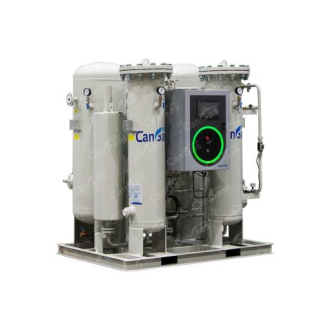
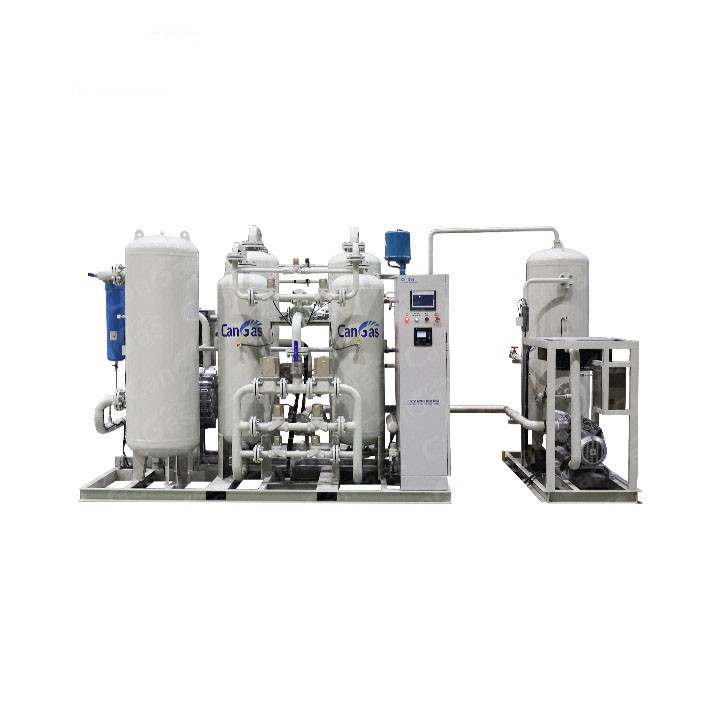
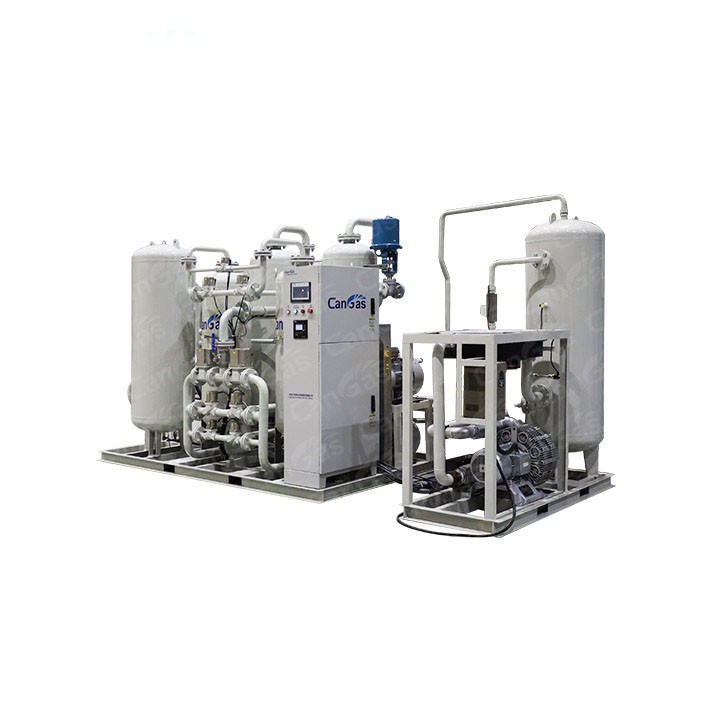
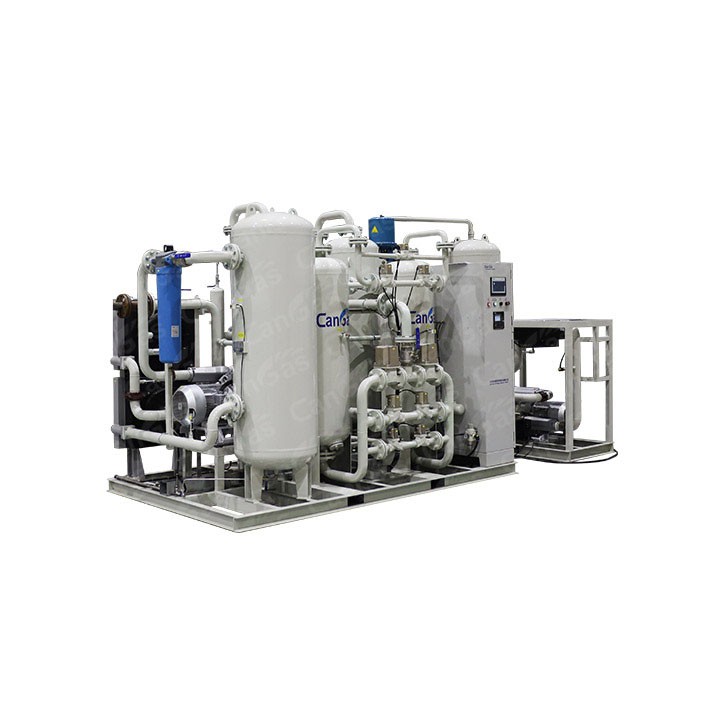
Carbon Dioxide Capture System
Gas Recovery and Purification Equipment
Product Introduction
CAN GAS possesses extensive expertise in gas separation and recovery, offering dry, wet, and cryogenic separation systems tailored to diverse raw gas characteristics and purity requirements. This enables us to serve a wide range of industries and application scenarios worldwide.
1. Dry Separation: Includes pressure swing adsorption (PSA) and membrane separation, as well as integrated solutions adapted to varying conditions.
2. Wet Separation: Primarily employs chemical absorption methods.
3. Cryogenic Separation: Designed to meet food-grade and industrial-grade CO2 demands by separating gases based on their differing boiling points at low temperatures.
Core Advantage
 Customized design with high recovery rate, meeting application needs for industrial-grade, food-grade, electronic-grade, and other different requirements;
 Adopts PLC control system, fully automated operation throughout the process, simple to operate;
 Mature process flow and equipment design, stable operation;
 Flexible equipment processing, low investment, and low energy consumption during operation.
The growing severity of global environmental issues, rising corporate carbon emission costs, and steadily increasing demand for CO2—particularly in the food industry and other application sectors—are creating significant market opportunities and higher standards for CO2 recovery and carbon capture equipment providers.
Pressure Swing Adsorption (PSA)
Upon entering the adsorption tower of the Pressure Swing Adsorption (PSA / VPSA) unit, the raw gas undergoes a cyclic adsorption-desorption process driven by pressure changes.
During the pressurization phase, carbon dioxide (CO2) in the gas is captured by the adsorbent, while less readily adsorbed impurities are discharged as tail gas from the adsorption bed outlet.
In the subsequent depressurization and evacuation phase, the adsorbed CO2 is released from the adsorbent and collected as product gas, thereby regenerating the adsorbent for the next cycle.
During the pressurization phase, carbon dioxide (CO2) in the gas is captured by the adsorbent, while less readily adsorbed impurities are discharged as tail gas from the adsorption bed outlet.
In the subsequent depressurization and evacuation phase, the adsorbed CO2 is released from the adsorbent and collected as product gas, thereby regenerating the adsorbent for the next cycle.
Specifications
- 100~5000Nm³/hCapacity
- 70~90%Purity
- 0.3-0.65kWh/m3Power Consumption
- 75-95%Recovery rate
Chemical Absorption Method
A typical chemical absorption process primarily consists of two core units: an absorption tower and a regeneration (or desorption) tower
Specifications
- 0.3~5t/hOutput
- 99%Purity
- 3.2~2.4GJ/tSteam consumption
- 90~95%CO2 capture and recovery rate
Cryogenic Separation Method
The fundamental principle of low-temperature distillation is to utilize differences in the volatility (or boiling points) of mixture components.Efficient separation is achieved through repeated stages of partial vaporization and partial condensation within the distillation column.
Specifications
- 0.3~10%Output
- 99.99%purity
- 270~240kWh/m³Power Consumption
Application Scenario

CanGas® After-sales Service Content
CAN GAS not only escort the machine, but also is committed to becoming a long-term trusted strategic partner,Together to create an outstanding, reliable and sustainable industrial future.

On-site service

Relocation service

Remote Services

Renovation services

Quality assurance service

Spare parts service

Upgrade service

Maintenance service
Service Consulting

Headquarters:B514~516, GID International Center, 27 Nanbinhe Road, Xicheng District, Beijing, China, 100055.
Factory: 10 Science Avenue, Gu an Industrial Zone, Langfang City, Hebei Province, China, 065500
Contact
International Sales
Tel: +86 13910382975
Technical & Service Support
Tel: +86 13910382839
Copyright ©2025 CAN GAS All Rights Reserved