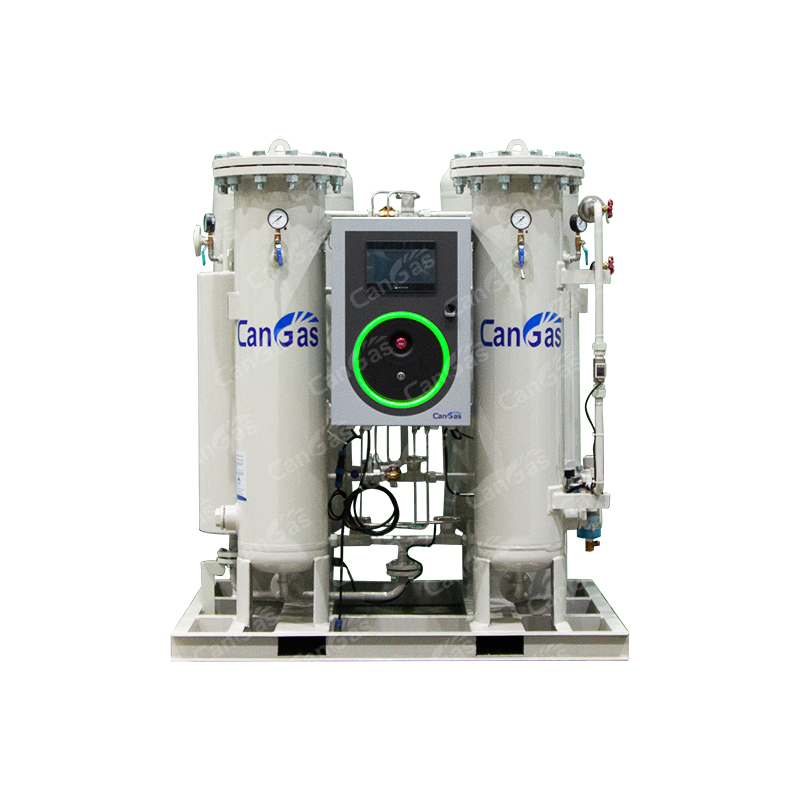

With the rapid development of industrialization, noise pollution has become one of the world's environmental problems, seriously impacting human quality of life, health, and the ecological environment. As part of industrial equipment, PSA nitrogen generators produce noise—so how can users control it? This article provides a comprehensive analysis and explanation of these issues.
A PSA nitrogen generator system typically consists of an air compressor, nitrogen generation unit, valves, buffer tanks, and filter groups. While most components operate quietly, the main sources of noise include the air compressor, valve switching, and gas flow. Specifically:
1. Air Compressor Noise: The compressor is both the core component of the PSA nitrogen generation system and its primary noise source. Noise arises mainly from moving mechanical parts and vibration caused by gas compression.
2. Valve Switching Sound: In PSA systems, numerous valves work together to control airflow direction and on/off states. Their opening and closing creates impact noise, particularly noticeable under high pressure differentials.
3. Gas Flow Noise: High-speed gas passing through internal pipes and adsorption towers also generates sound. This type of noise correlates closely with flow rate, pipe design, and the packing condition of adsorbent materials.
Additional potential noise sources include electromagnetic interference from motors or other electrical components during operation, unsilenced low-pressure exhaust discharge, and malfunctioning individual parts.
To address these negative impacts, professional nitrogen generator manufacturers typically improve and optimize noise levels through multiple approaches:
Technological Advancements
● Design Optimization: Employ advanced low-noise designs tailored to system characteristics.
● New Material Application: Use innovative soundproofing materials for enhanced isolation effectiveness.
● Technology Updates: Incorporate cutting-edge quiet technologies as they become available.
Active Noise Control
● Sound Insulation: Install soundproof enclosures or use absorptive materials around the unit to block noise propagation.
● Vibration Damping: Inspect and reinforce support structures/fasteners to minimize vibration-induced noise transmission.
● Regular Maintenance: Ensure smooth operation via scheduled servicing and lubrication to prevent unusual sounds.
Environmental Planning
● Plant Layout: Position noisy equipment away from workplaces, break areas, and rest zones during facility design.
● Site Considerations: Assess impact on surrounding environments and nearby residents; implement suitable mitigation measures.
● Green Barriers: Plant trees/vegetation around facilities to naturally reduce audible transmission.
Following such optimizations, industrial PSA nitrogen generators typically achieve sound levels around 70 decibels (dB). This significantly reduces impact on surrounding areas and worker health. Therefore, with appropriate noise control strategies, PSA systems can comply with relevant regulations, help businesses fulfill social responsibilities, and ensure employee safety and wellbeing.