
Let us Talk About Adsorbent Regeneration in Pressure Swing Adsorption
What is Adsorbent Regeneration?
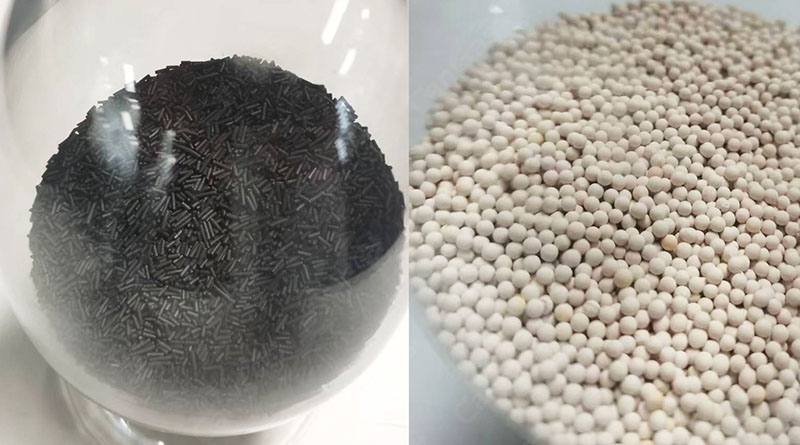
The core of the PSA process lies in the cyclic adsorption and regeneration of the adsorbent (molecular sieve).
Adsorbent regeneration is essentially the reverse of the adsorption process. Once the molecular sieve reaches saturation, the adsorbed components must be desorbed through a specific procedure to restore the adsorbent's capacity for the next cycle. This process is commonly referred to as "regeneration."
The Importance of Adsorbent Regeneration
In a PSA process, both the intrinsic performance of the adsorbent and the efficiency of the regeneration step directly determine key technical and economic indicators, such as product gas purity, recovery rate, and energy consumption. Consequently, optimizing the adsorption-regeneration cycle is a primary competitive advantage for major technology providers.
Adsorbent Regeneration Methods
Adsorption and regeneration are governed by two main variables: pressure and temperature. At a constant temperature, molecular sieves exhibit pressure-dependent adsorption and desorption. Conversely, at a constant pressure, the amount of adsorbate decreases as the temperature rises. In PSA technology, however, regeneration is primarily achieved through pressure changes. The common regeneration methods include:
(1) Depressurization (Basic): The pressure in the adsorption tower is reduced to atmospheric pressure, allowing the adsorbed components to desorb driven by the system's pressure drop. This method is convenient, energy-efficient, and fast, making it a fundamental step in PSA. However, the regeneration effect alone is often insufficient.
(2) Vacuuming (Enhanced Quality and Efficiency): A vacuum pump evacuates the adsorption tower to below atmospheric pressure. This significantly increases the pressure differential, creating a strong driving force for desorption. While this achieves superior regeneration, it also increases energy consumption, cycle time, and capital equipment costs.
(3) Purging (Optimized Recovery): The adsorption bed is counter-currently purged with product gas or another inert gas at atmospheric or low pressure to facilitate desorption. This method consumes a portion of the product gas, and the degree of regeneration depends on the flow rate and purity of the purge gas, which requires an additional gas control system.
(4) Displacement (Special Separation): A gas with a higher adsorption affinity is introduced to displace the previously adsorbed components from the adsorbent. This method requires the introduction and subsequent separation of a third substance, making the process complex. Furthermore, the displacement gas itself must be regenerated.
When selecting the appropriate regeneration method, factors such as the properties of the feed gas, product specifications, and adsorbent characteristics must be comprehensively evaluated. Ultimately, the regeneration of adsorbents like molecular sieves should be designed synergistically, with pressure reduction serving as the foundational step.