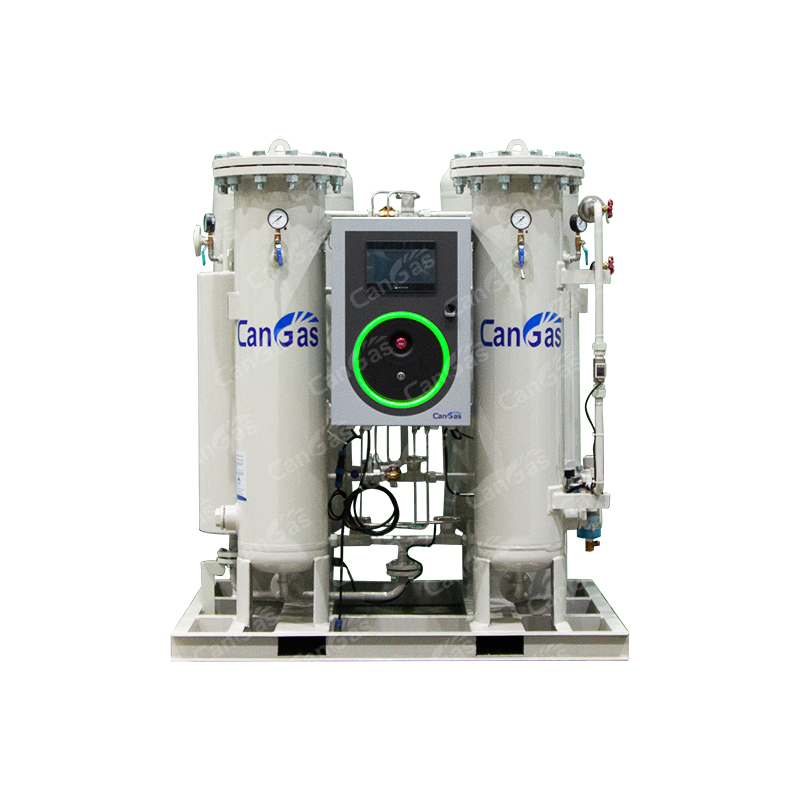

What to Do If the Pressure in a Single Adsorption Tower of a PSA Nitrogen Generator Drops to Zero
Normally, the pressure within an adsorption tower—the core component of a PSA nitrogen generator—fluctuates cyclically. During operation, two towers alternate between pressurization for adsorption and depressurization for regeneration. Typical adsorption pressure ranges between 0.7 and 0.8 MPa. If pressure in one tower persists at zero, this indicates definitive equipment malfunction.
Such failure reduces both nitrogen output and purity, potentially disrupting the customer's production schedule. Therefore, immediate diagnosis and correction are essential to restore efficient, safe, and stable operation of the PSA system.
Below are possible causes, solutions, and their probability when a single tower fails to pressurize:
Valve Malfunction
Probability: High
Cause: Anomalous opening/closing of pneumatic or solenoid valves blocks gas flow into or out of the affected tower.
Solution: Visually inspect and test relevant valves; replace defective units to restore proper function.
Piping Leakage
Probability: Medium
Cause: Leaks in the tower’s pipeline prevent pressure accumulation.
Solution: Systematically check all connections using soap solution or ultrasonic leak detectors. Repair or replace compromised sections to achieve complete airtightness.
Faulty Pressure Transmitter
Probability: Medium
Cause: A failed sensor provides incorrect pressure readings despite actual pressure presence.
Solution: Recalibrate or replace the transmitter using certified reference standards to ensure accurate system monitoring.
Control System Error
Probability: Medium
Cause: Software glitches or hardware failures prevent scheduled pressurization sequences from executing correctly.
Solution: Verify electrical connections, restart controllers, update firmware/software, and test input signals per manufacturer specifications.
Inadequate Air Supply
Probability: Low
Cause: Insufficient feed air volume from upstream compressors limits maximum achievable pressure.
Solution: Audit entire air supply chain—from intake filters to dryers—to confirm capacity meets design requirements under loaded conditions.
Excessive Venting
Probability: Low
Cause: Stuck-open exhaust valve continuously bleeds off pressure before it can build up.
Solution: Manually actuate and observe vent valve operation; clean, service, or replace if sluggish or seized.
Degraded Adsorbent Media
Probability: Low
Cause: Exhausted molecular sieves lose adsorptive capacity, impeding normal pressure dynamics.
Solution: Conduct breakthrough tests; replace spent bed material according to manufacturer guidelines.
Human Operative Error
Probability: Situational
Cause: Mistaken procedure execution (e.g., omitted valve alignment).
Solution: Reinforce SOP training with simulated emergency scenarios and implement interlock systems where feasible.
When troubleshooting PSA systems exhibiting this symptom, begin with external visual inspection before progressing to internal components. Always involve qualified technicians familiar with OEM specifications. Proactive maintenance programs significantly reduce occurrence frequency while enhancing overall system reliability. For complex issues beyond basic diagnostics, contact original equipment manufacturers for expert support.