
What to Do If Your PSA Nitrogen Generator’s Pressure Rises Slowly?
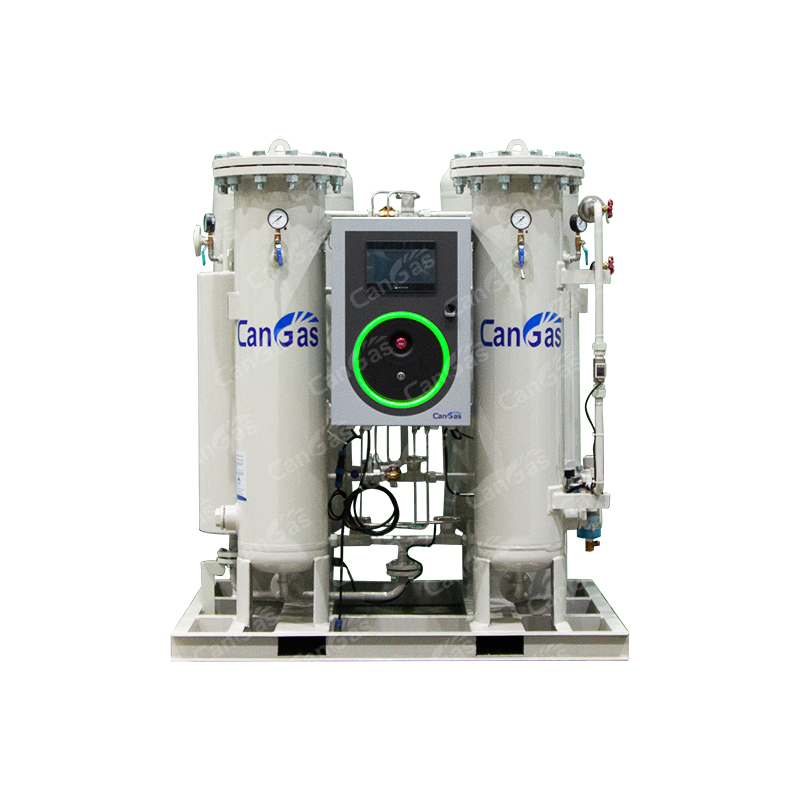
In daily production, users can monitor the equipment’s operating parameters in real time via the detailed control panel for abnormalities. However, if the nitrogen generator exhibits slow pressure buildup, extra attention is required. This issue not only impacts nitrogen output and purity but may also trigger chain reactions that harm the entire system. Specifically:
● Increased energy consumption: When pressure rises slowly, the air compressor runs longer to maintain sufficient output, raising energy costs and accelerating equipment wear.
● Reduced system stability: Prolonged pressure buildup forces the system to operate below its designed capacity, compromising overall reliability.
● Accelerated molecular sieve degradation: Abnormal pressure stresses the adsorbent bed, increasing wear and shortening its service life.
● Valve damage risks: Chronic pressure irregularities strain control valves (e.g., check valves, solenoids), reducing their lifespan and escalating maintenance expenses.
● Frequent shutdowns: Persistent slow ramp-up may trigger protective automatic stops, causing cyclic start/stop cycles that further degrade components.
Troubleshooting Guide
Slow pressure ascent in a PSA nitrogen generator typically stems from three primary causes: inadequate air supply, degraded adsorbent performance, or system leaks. Address these systematically:
● Air Supply Issues
✓ Inspect intake filters/valves for blockages.
✓ Verify air compressor functionality and delivery capacity.
● Adsorbent Efficiency Loss
✓ Assess molecular sieve condition—contamination or aging may impair adsorption efficiency. Clean or replace as needed.
● Leakage Detection
✓ Thoroughly check all internal piping, connections, and seals for leaks using soap solution or electronic sniffers. Repair immediately upon discovery.
● Valve Malfunctions
✓ Test sequence control valves (inlet/exhaust) for proper actuation timing and seal integrity. Ensure unobstructed gas pathways.
● Timer Calibration Errors
✓ Confirm cycle timing accuracy between adsorption towers. Misaligned timing disrupts pressure dynamics; recalibrate controllers if necessary.
● Check Valve Failure
✓Validate non-return valve operation to prevent backflow or unintended pressure release during cycles. Replace faulty units promptly.
● Demand vs. Capacity Mismatch
✓ Cross-check actual nitrogen consumption against generator specifications. Upsize capacity if sustained peak demand exceeds rated output. (Rare but critical when present.)
● Instrumentation Faults
✓ Calibrate pressure transducers/gauges to rule out sensor drift causing false readings. Note: Though minor, such errors can mask underlying issues.
● Operator Errors
✓ Audit adherence to SOPs—improper startup sequences or parameter settings often exacerbate slow pressurization. Train personnel accordingly.
● Environmental Effects
✓ Account for low ambient temperatures reducing air density; preheat intake air if freezing conditions persist. Use baffle plates to stabilize flow patterns.
Slow pressure buildup in PSA systems demands comprehensive diagnostics across the entire installation—from upstream compression to downstream distribution. Always follow manufacturer guidelines and engage factory support for complex failures. Early intervention prevents cascading damage and costly downtime.