
For enterprises planning to purchase molecular sieve oxygen generators, selecting a reliable manufacturer is a critical step. This decision not only affects equipment performance and operating costs, but also directly determines production continuity, product quality control, and the company’s long-term development.
To comprehensively evaluate a manufacturer, enterprises shall assess the following key dimensions:
Corporate Qualifications and Certifications
Verify whether the manufacturer holds complete production qualifications and official industry certifications. These credentials demonstrate the enterprise’s compliance and operational legitimacy and serve as a fundamental guarantee for stable product quality.
Technical Capabilities
· Review the manufacturer’s industry experience, R&D investment, and intellectual property reserves, including technical patents and software copyrights. Compared with small workshops, professional and large-scale manufacturers deliver more stable product quality and standardized after-sales services.
· Evaluate the manufacturer’s technical iteration capabilities and confirm whether it possesses core technologies to continuously reduce energy consumption and improve oxygen purity.
Product Quality
· Check product test reports and quality certifications to ensure full compliance with industry technical standards. For medical applications, the equipment must conform to YY 1468-2016 Medical Oxygen Concentrator Supply System for Medical Gas Pipeline Systems.
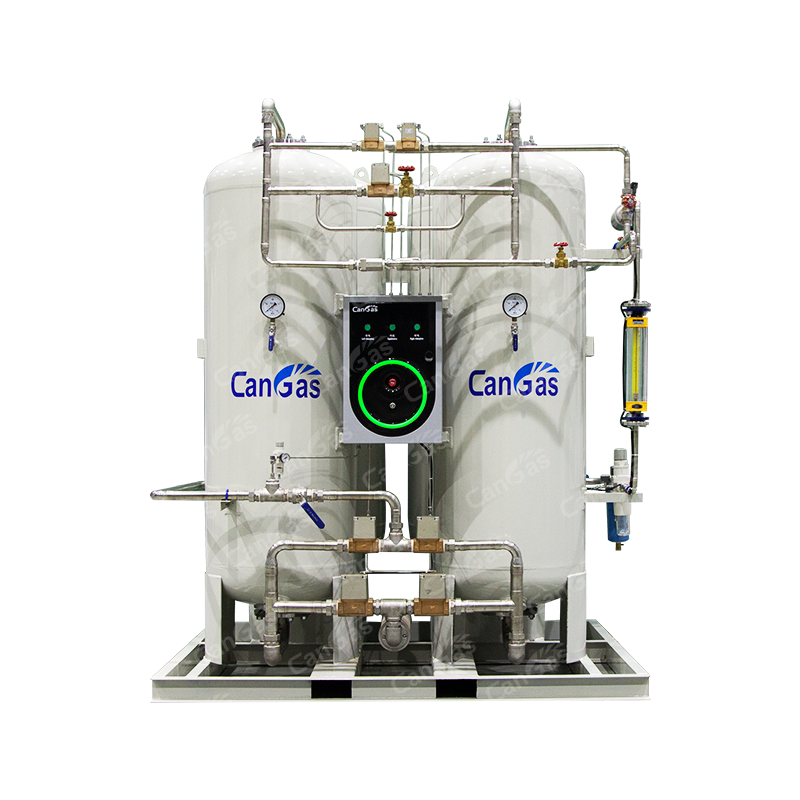
· Assess the quality of core components. The performance and service life of molecular sieves and air compressors directly impact oxygen generation efficiency and operational stability. Key supporting parts, including filters, control valves, and PLC systems, are also critical; priority should be given to internationally and domestically renowned brands.
Production Capacity
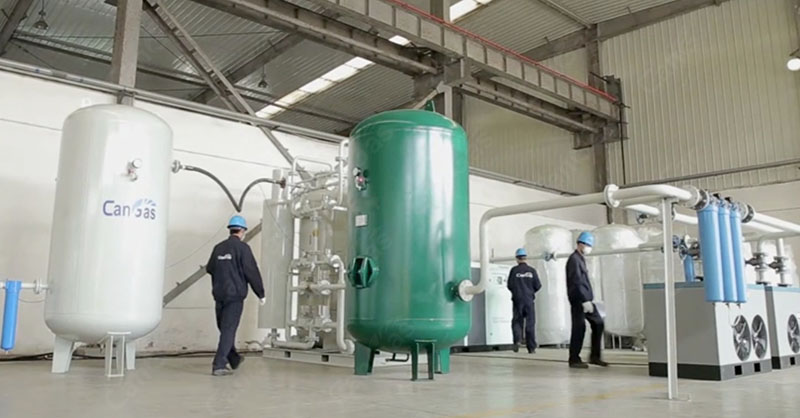
· Evaluate the manufacturer’s production scale and capacity, including factory area, complete quality inspection equipment, and standardized delivery cycles. Large-scale manufacturers adopt mature production processes and advanced manufacturing equipment to ensure stable and sustainable product supply.
· Inspect the manufacturer’s production management system, including standardized quality control procedures and operational management workflows. Scientific production management guarantees consistent product stability and reliability.
Brand Reputation & Practical Cases
· Cooperating with manufacturers with a good brand reputation and positive market feedback effectively reduces procurement and operational risks.
· Request authentic project cases from the manufacturer. Where conditions permit, conduct field visits to existing customer sites to observe actual equipment operation and obtain real user feedback.
After-Sales Service
· Confirm detailed after-sales service policies, including warranty period, on-site maintenance response speed, and professional technical support. Reliable after-sales support ensures timely troubleshooting and minimizes equipment downtime and production losses.
· Verify the manufacturer’s professional training capabilities for on-site operators to ensure standardized equipment operation and daily maintenance.
· Confirm that the manufacturer has a qualified backup supplier system, with at least two certified suppliers for core components to avoid supply risks.
It is recommended to conduct multi-party comparison and comprehensive evaluation before finalizing procurement decisions. Do not select suppliers based solely on low prices; fully consider product quality, operational performance, and after-sales service quality.
Be cautious of quotations significantly lower than the market average. Excessively low prices usually imply downgraded component quality, simplified processes, or incomplete after-sales guarantees.