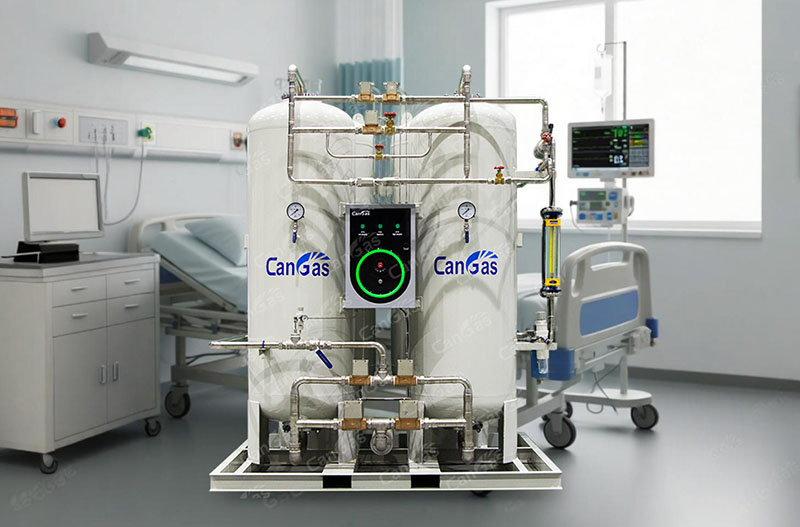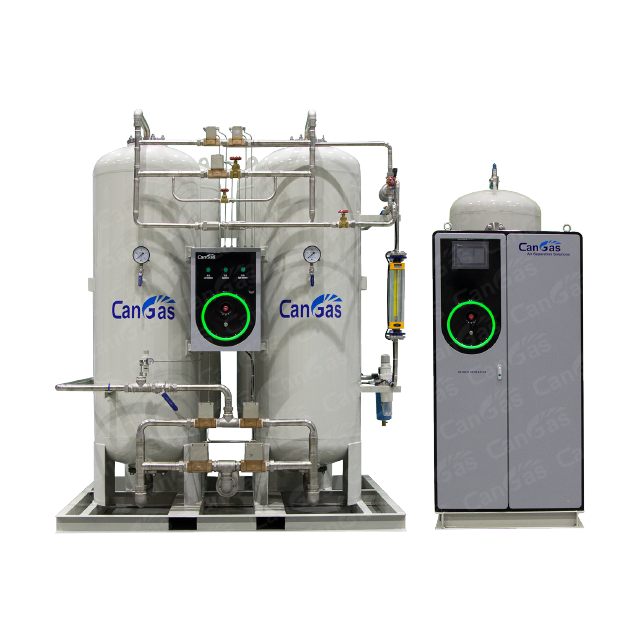

Application and Significance of Medical Molecular Sieve Oxygen Generation Systems (99.5%) in Medical Institutions
With the continuous improvement and optimization of molecular sieve oxygen generation technology, the equipment now boasts excellent oxygen generation capabilities, stably and efficiently producing medical oxygen with a purity of up to 99.5%, and providing a higher-quality oxygen supply for the medical field.
Here, 99.5% pure oxygen means that the proportion of impurities in the oxygen produced by the medical molecular sieve oxygen generation system is less than or equal to 0.5%. It should be understood as a production indicator for the oxygen source rather than a usage standard; this is to ensure patient safety.
Although the application of 99.5% pure medical oxygen is not widespread in routine treatment, it is essential for emergency care, surgery, and intensive care.
Direct Use Scenarios of High-Purity Oxygen
· Emergency Care and Intensive Care: In emergency situations such as cardiopulmonary resuscitation, shock, and severe hypoxemia, direct inhalation of high-purity oxygen (even 100%) is crucial for saving lives. For example, during endotracheal intubation or mechanical ventilation, it is necessary to quickly correct the hypoxic state.
· Surgery and Anesthesia: Maintaining high blood oxygen saturation (>95%) during surgery is a routine procedure. High-purity oxygen helps reduce anesthesia risks.
· Neonatal/Premature Infant Oxygen Therapy: High-purity oxygen is used to treat neonatal respiratory distress syndrome (RDS) to prevent damage to vulnerable organs caused by hypoxia.
Advantages Compared to Other Oxygen Sources
Real-time Supply and Flexible Response:
On-demand production eliminates the need for stockpiling. PSA medical oxygen generation systems produce oxygen in real-time according to clinical needs, avoiding the storage limitations of traditional liquid oxygen or high-pressure cylinders and eliminating the risk of oxygen shortages. This is particularly suitable for emergencies (such as sudden surges in patient oxygen demand).
Economic Efficiency and Optimized Operating Costs:
· Low Long-Term Costs: Compared to liquid oxygen or cylinder oxygen, PSA systems have a higher initial investment but lower long-term operating costs (lower electricity and maintenance costs). They also eliminate the need for frequent oxygen procurement and transportation, making them suitable for long-term use.
· Reduced Waste: Traditional cylinder oxygen may expire before being fully used, leading to waste. PSA systems produce on demand, precisely matching usage to avoid resource waste.
Safety Management
High Safety:There is no need to store large quantities of compressed oxygen (such as liquid oxygen tanks or high-pressure cylinders), which reduces safety hazards such as explosions and leaks and meets hospital fire safety requirements.
Environmental Protection and Sustainability
· Green Oxygen Production:PSA technology uses air as a raw material to produce oxygen physically. The oxygen production process involves no wastewater or exhaust gas emissions, meeting environmental protection requirements.
· Renewable Energy Compatibility:It can be integrated with the hospital's new energy power supply systems (such as photovoltaic and wind power) to further reduce carbon emissions and contribute to the "carbon neutrality" goal.
Intelligent and Automated Management
· Automated Operation:The system can automatically adjust pressure, flow rate, and purity, requiring no dedicated personnel, thereby reducing labor costs. It is also equipped with remote monitoring and fault early warning functions to improve operation and maintenance efficiency.
· Data-Driven Management:It records data such as oxygen consumption and equipment status, helping hospitals optimize oxygen allocation and usage strategies.
Special Application Scenarios
High Altitude or Remote Areas:The PSA system does not rely on an external oxygen supply chain and can achieve independent oxygen supply in high-altitude areas, islands, and other areas with inconvenient transportation.
Although most therapeutic oxygen requires a purity of less than 99.5%, this does not diminish the importance of a 99.5% oxygen source for medical institutions. Furthermore, compared to other high-purity oxygen sources, medical molecular sieve oxygen generation systems (99.5%) can reduce storage risks for medical institutions and optimize hospital operational efficiency through intelligent management. Despite the higher initial investment, its long-term benefits and comprehensive advantages make it an ideal choice for modern medical institutions.