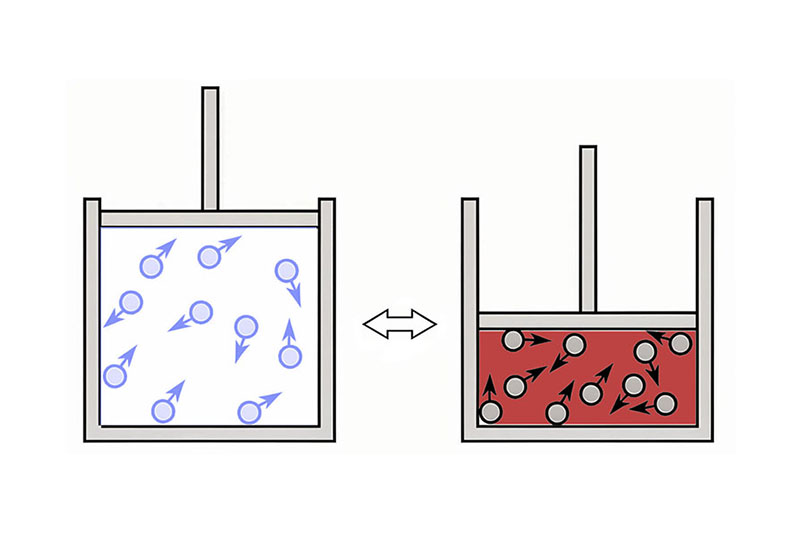

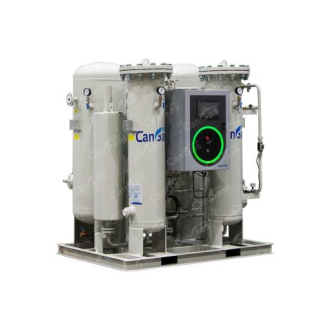
As core units for gas volume measurement, Nm³ (normal cubic meter) and m³ (cubic meter) have distinct technical definitions and application scenarios in Pressure Swing Adsorption (PSA) air separation systems. Strict differentiation between the two is essential for accurate equipment selection, process calculation, and performance evaluation.
Differences in Definition
Nm³ (Normal Cubic Meter): Represents the gas volume measured under standard temperature and pressure conditions, defined as 0°C and 1 standard atmosphere (101.325 kPa).
m³ (Cubic Meter): The basic volumetric unit that indicates the actual gas volume under on-site operating temperature and pressure conditions at the time of measurement.
The value of m³ is variable and affected by real-time operating temperature and pressure. It is widely used for calculating on-site gas consumption, equipment structural dimensions, and instantaneous flow rates.
Why Distinguish Between Nm³ and m³
Confusing standard volume and actual volume will lead to inaccurate calculations and improper equipment matching. The key reasons for strict distinction are as follows:
1. Wide pressure fluctuations in PSA operation
PSA equipment relies on periodic pressure switching to complete adsorption and desorption cycles, with operating pressures varying multiple times across different working stages. For a fixed mass of gas, the actual volume (m³) under high adsorption pressure is much smaller than the volume under low desorption pressure, while the standard volume (Nm³) remains constant and unaffected by pressure changes.
2. Significant temperature variation during operation
Gas compression, exothermic adsorption, and endothermic desorption all cause obvious temperature changes, which directly affect the actual gas volume measured in m³. Adopting Nm³ eliminates temperature interference and ensures accurate quantification of gas output.
3. Unified standard for performance evaluation
Equipment production capacity, gas recovery rate, and energy consumption must be evaluated based on standard Nm³ indicators. Only standard-state data supports horizontal comparison between different equipment and production lines, avoiding evaluation errors caused by inconsistent operating conditions.
4. Accurate equipment structural design
The sizing of adsorption towers, gas storage tanks, and piping systems must be calculated based on real operating volume (m³) under actual working pressure and temperature. Nm³ cannot be directly used for structural design and pipeline dimensioning.
In PSA air separation applications, confusing Nm³ and m³ will directly cause technical deviations, including:
· Inaccurate process simulation due to neglect of temperature and pressure volume correction
· Incorrect equipment model selection caused by misusing standard volume for actual operating volume
· Deviations in energy efficiency assessment and operational data analysis
Conversion Relationship Between Nm³ and m³
The volume conversion between standard-state gas and actual working gas follows the ideal gas law:
$$ \\\\ frac{P_1 V_1}{T_1} = \\\\ frac{P_2 V_2}{T_2}$$
Where:
· P₁, V₁, T₁: Pressure, standard volume (Nm³), and temperature under standard conditions (kPa, Nm³, K)
· P₂, V₂, T₂: Actual operating pressure, actual volume (m³), and actual temperature (kPa, m³, K)
Conversion Example
Convert 100 m³ of gas under actual operating conditions (25°C, 121 kPa) into standard volume (Nm³).
Unified parameter calibration:
· Actual temperature T₂ = 25°C = 298.15 K
· Actual pressure P₂ = 121 kPa
· Standard pressure P₁ = 101.325 kPa (corrected industry standard)
· Standard temperature T₁ = 273.15 K
Conversion formula:
$$V_1 = V_2 \\\\ times \\\\ frac{P_2}{P_1} \\\\ times \\\\ frac{T_1}{T_2}$$
Calculation process:
V₁ = 100 × (121 ÷ 101.325) × (273.15 ÷ 298.15)
V₁ ≈ 108.9 Nm³