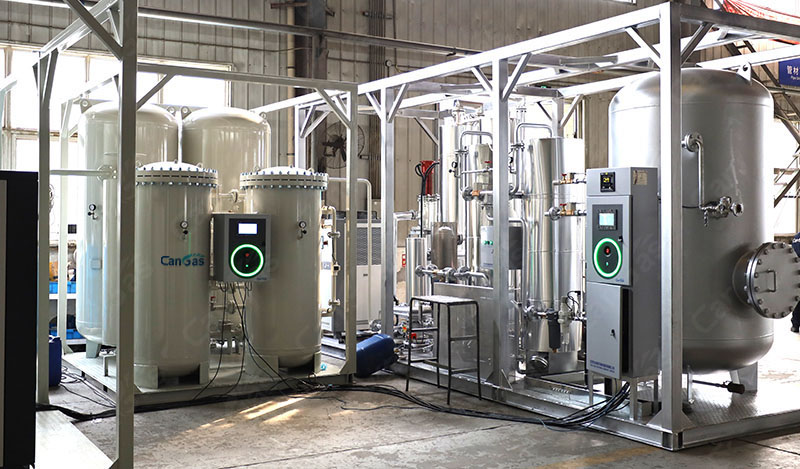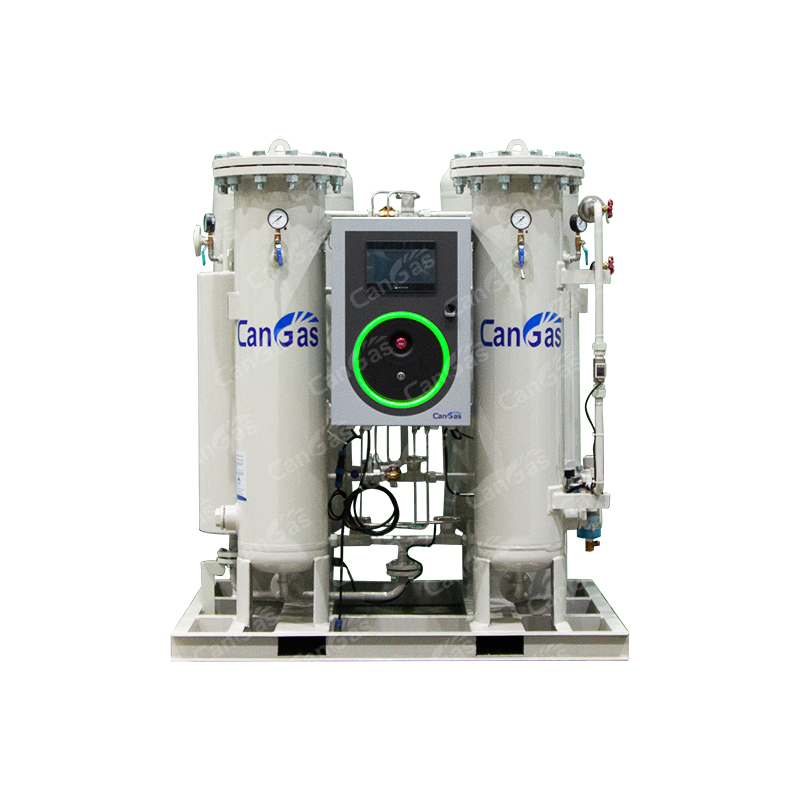

When a PSA nitrogen generator is restarted following a shutdown, the purity of the product nitrogen typically drops. This occurs because operating conditions fluctuate during the shutdown and restart processes. The primary factors include:
Shutdown Phase: Once the equipment stops, pressure within the adsorption towers gradually dissipates, and operating temperatures drop. Both factors weaken the molecular sieve's adsorption performance, thereby affecting product nitrogen purity.
Startup Phase:
•Residual Gas Contamination: Residual gases (such as oxygen or water vapor) left in the piping and vessels during the shutdown mix with the nitrogen upon restart, lowering product purity.
•Cycle Re-establishment: PSA generators rely on an adsorption-desorption cycle for gas separation. This cycle must be re-established during startup. Until it stabilizes, adsorbent efficiency may be insufficient to immediately achieve the target purity.
•Purge Requirement: After startup, the system requires time to purge mixed gases and restore a stable gas separation state. During this transitional period, maintaining expected quality standards is challenging.
While the impact of restarting on nitrogen purity seems unavoidable, achieving "zero" impact is possible if the system can meet higher operational demands in several key areas:
1.Equipment Design: A high-quality design ensures stability and rapid recovery, allowing the unit to quickly return to its set purity level after a restart.
2.Adsorbent Condition: Optimal adsorbent health makes it easier to maintain consistent product gas purity.
3.System Sealing: Excellent sealing performance helps prevent leaks and maintain stable gas purity.
4.Control System: An advanced control system adheres more precisely to set parameters, minimizing the impact of startups and shutdowns on purity.
Maintaining consistent nitrogen purity after a restart offers significant advantages for industrial production, enabling higher efficiency and lower operating costs.