
Review of the PSA Working Principle
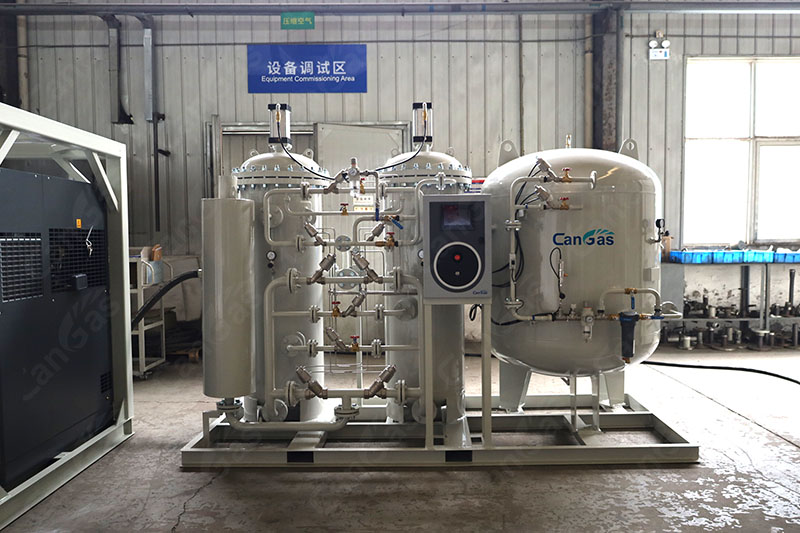
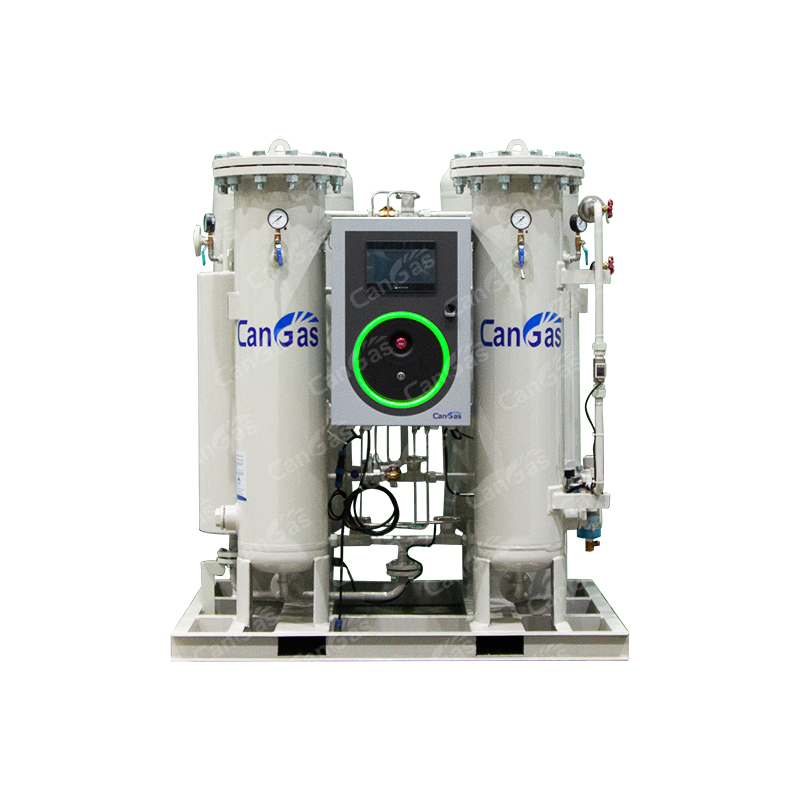
For a PSA (Pressure Swing Adsorption) nitrogen generator, the process cycles between two towers (Tower A and Tower B) and consists of two main stages: pressurized adsorption and depressurized desorption. In Stage 1 (pressurized adsorption), the carbon molecular sieve adsorbs oxygen and impurities from compressed air, allowing nitrogen to be enriched and output as product gas. Upon entering Stage 2, oxygen adsorption reaches saturation. At this point, the adsorbed oxygen and impurities must be thoroughly released to prepare the sieve for the next cycle — a process known as "regeneration" — which requires depressurization.
However, simply depressurizing the tower until pressure drops to near‑zero (slightly positive) leaves the vessel filled with high‑concentration oxygen released by the sieve, making it impossible to fully clear residual oxygen. Therefore, "back‑purge gas" is required to assist with the cleaning process.
Technical Implementation
Back‑purge gas is sourced from the adjacent adsorption tower. As the two towers operate alternately, Tower A may be in the desorption phase while Tower B is in the adsorption / nitrogen‑production phase. During this period, product nitrogen from Tower B flows in reverse into Tower A (undergoing desorption) to sweep away residual oxygen and impurities, facilitating efficient regeneration of the carbon molecular sieve. The displaced oxygen is then vented to the atmosphere. This process runs concurrently with desorption, ensuring complete removal of previously adsorbed oxygen and preventing degradation of product nitrogen purity.
The Importance of Back‑Purge Gas
In PSA nitrogen‑generation equipment, back‑purge gas is a critical process component. It accelerates and improves carbon molecular sieve regeneration and flushes impurities out of the vessel. Its key benefits include:
• Ensuring product nitrogen quality: Back‑purge gas enables fast, thorough regeneration of the carbon molecular sieve. This guarantees effective adsorption in subsequent cycles and maintains stable nitrogen purity.
• Ensuring stable system operation: Triggering the back‑purge sequence promptly as a tower approaches saturation avoids risks such as sudden drops in gas output or system shutdown caused by clogging. This is a key technical step for sustaining continuous, stable nitrogen production at target purity within the Pressure Swing Adsorption (PSA) process.
Furthermore, appropriate back‑purge pressure minimizes mechanical wear on equipment, providing substantial protection for components including valves and piping.
In summary, back‑purging is not merely a simple physical cleaning process; it is a vital mechanism that guarantees efficient and stable PSA‑system performance. Although back‑purging consumes a portion of product nitrogen, its core value lies in trading controlled, short‑term nitrogen consumption for high‑efficiency system operation and better resource utilization.
Naturally, the real‑world performance of back‑purging is closely tied to the process design, parameter control, and equipment‑management standards of the PSA nitrogen‑generation system.