

Why Glass Melting Furnaces Adopt Oxy‑Enriched Combustion
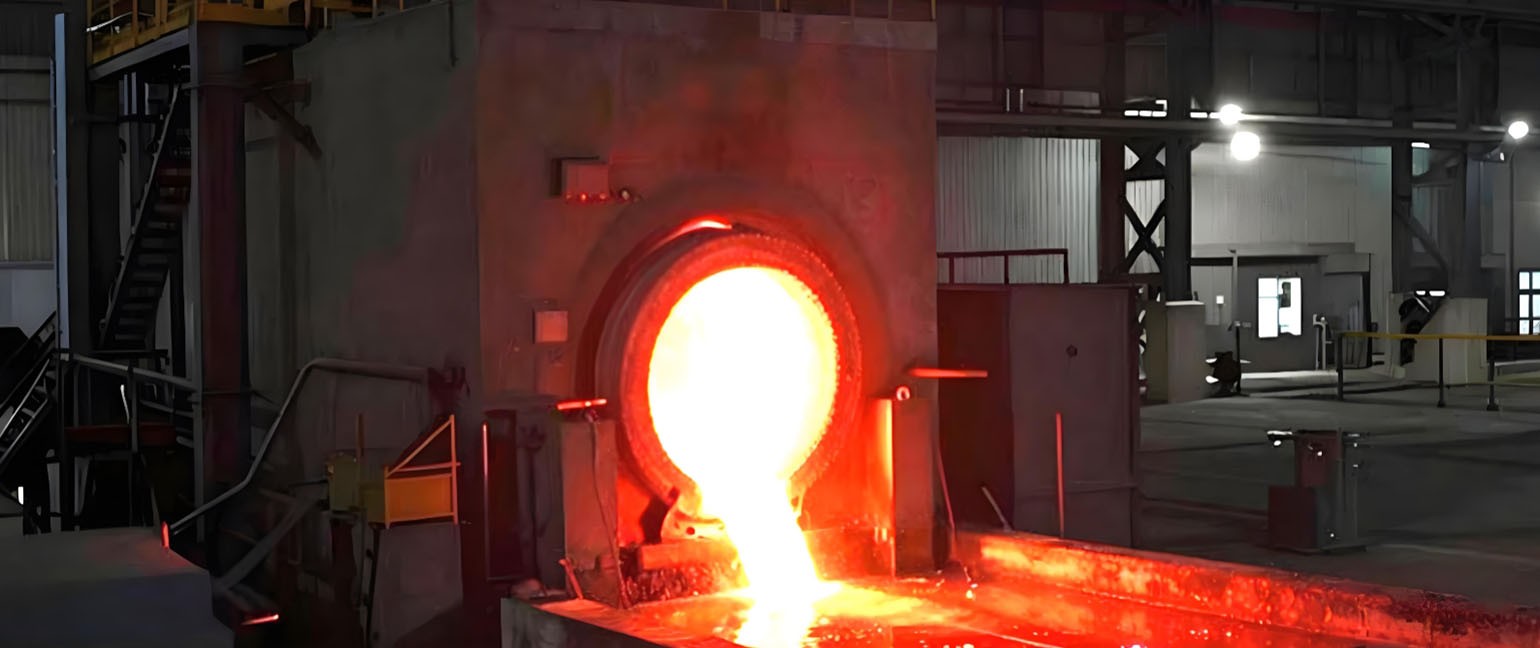
Glass melting furnaces are energy‑intensive thermal processing units that run continuously. In conventional air‑fuel combustion, nitrogen — which makes up 78% of air — absorbs and carries away substantial amounts of heat, resulting in thermal losses and NOₓ emissions. With oxy‑enriched combustion, the oxygen concentration in the combustion‑supporting gas is raised, reducing the quantity of nitrogen participating in combustion. This effectively cuts heat losses and NOₓ generation.
Quantifiable benefits of oxy‑enriched combustion include:
• Higher melting throughput
• Reduced fuel consumption (e.g., natural gas) per unit of finished product
• Lower NOₓ emissions, which cuts environmental compliance and operating costs
• Stabilised temperature distribution inside the furnace, reducing product defects and raising yield
• Extended furnace service life
Advantages of On‑Site Oxygen Generation
Several mainstream industrial oxygen supply options are available today, including bulk liquid oxygen (LOX) delivery and cryogenic air separation. Among these alternatives, on‑site oxygen generation systems based on VPSA (Vacuum Pressure Swing Adsorption) or PSA (Pressure Swing Adsorption) stand out. They are particularly well suited to meet requirements for long‑term cost control, supply stability, simple deployment and safe operation:
• Compared with purchasing liquid oxygen: lower long‑term costs and stable, controllable oxygen supply For glass furnaces, shutdowns carry extremely high costs. In fact, the core value of on‑site oxygen generation lies not only in cost savings, but also in turning oxygen supply from an outsourced dependency into an in‑house controllable process. Although the upfront capital expenditure for an on‑site system is usually higher than buying liquid oxygen, its long‑run operating cost is lower, and the risk of unplanned oxygen supply outages is eliminated.
• Compared with cryogenic air separation: lower capital investment, faster commissioning, and better fit for oxygen‑only requirements For oxy‑enriched combustion on glass furnaces, cryogenic air separation is often oversized for the application. VPSA/PSA systems match the typical oxygen purity requirement of glass melting furnaces (roughly 80%–93%), delivering lower specific power consumption, stable performance and simpler maintenance.
Quantifiable benefits of on‑site oxygen generation include:
• Oxygen supply cost: lower unit oxygen cost versus liquid oxygen supply
• Fuel consumption: reduced natural gas or other fuel gas usage
• Emissions compliance and after‑treatment costs: lighter NOₓ, particulate and flue‑gas treatment burdens
• Production capacity, product quality and furnace lifespan: higher revenue per tonne of product and extended furnace service life
• Operational, investment and safety benefits: reduced reliance on liquid oxygen, lower supply interruption risk, and fewer hazards related to LOX storage, transport and cryogenic leakage
Selecting Between VPSA and PSA Oxygen Generation Systems
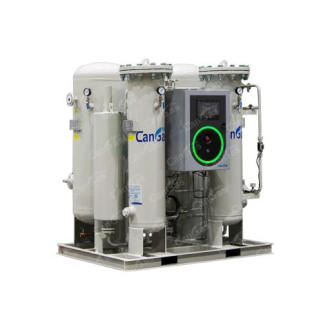
PSA (Pressure Swing Adsorption) works through pressurised adsorption and depressurised desorption. It uses compressed air and molecular sieves operating near atmospheric pressure to adsorb nitrogen and produce oxygen.
VPSA (Vacuum Pressure Swing Adsorption) operates with low‑pressure adsorption and vacuum (negative‑pressure) desorption. Its key difference from conventional PSA is that it uses Roots blowers instead of air compressors to deliver low‑pressure feed air, while vacuum pumps perform desorption to sustain continuous oxygen production.
While PSA can achieve higher oxygen purity, its cost rises sharply for high‑flow applications. For this reason, PSA is generally deployed for small‑to‑medium‑scale projects, intermittent operation, space‑constrained sites or projects with limited capital budgets.
VPSA cannot reach the same high oxygen purity levels as PSA, but it is ideal for medium‑to‑large oxygen demand. It delivers lower specific energy consumption and reduced maintenance costs, making it the preferred choice for medium and large glass melting furnaces requiring round‑the‑clock continuous operation.
Choose PSA (Pressure Swing Adsorption) when:
• The application is daily glassware production, small furnace channel oxygen enrichment or local burner oxygen enrichment, with oxygen demand ≤ 200 Nm³/h
• The furnace does not run at full load year‑round and undergoes periodic maintenance shutdowns (lower annual operating hours)
• Site space is limited, the budget is tight, and large civil works for noise abatement are undesirable
• Higher oxygen outlet pressure is required (a booster can be added separately)
PSA System Considerations
Glass melting furnaces are sensitive to oil contamination. An oil‑free air compressor paired with multi‑stage oil removal filters is therefore mandatory. System redundancy must be designed in to avoid oxygen supply interruptions. Evaluation should not focus solely on upfront equipment price, but on the total oxygen cost over the full lifecycle.
Choose VPSA (Vacuum Pressure Swing Adsorption) when:
• Oxygen demand ≥ 200 Nm³/h, with 24/7 continuous operation (e.g., float glass or photovoltaic rolled glass melting furnaces)
• Power tariffs are high, and long‑term operating expenditure reduction is a priority (typical payback period: 1–3 years)
• Stable long‑term oxygen concentration of 80–93% is required, with minimal gradual performance decay of molecular sieves
• Centralised oxygen supply feeds multiple burners simultaneously, with large flow fluctuations
VPSA System Considerations
Noise and vibration control for vacuum pumps and blowers is critical. An oxygen buffer tank and system redundancy must be included, as oxygen supply failure at the melting furnace results in very high losses. An oxygen booster may be fitted if specific outlet pressure targets are needed.
Selection Strategy for On‑Site Oxygen Generation
For manufacturing enterprises, an oxy‑enriched combustion project is more than just purchasing oxygen generation equipment. Fundamentally, it is an energy‑consumption structure optimisation. The success of this optimisation heavily depends on high‑quality front‑end consultation. Discussions should cover these five core areas:
1. Basic Furnace Parameters
These include furnace type, fuel type, daily melting capacity, current oxygen concentration and flow rate, continuous production requirements, safety redundancy level, site conditions and the existing cost of liquid oxygen procurement.
2. Oxygen Generation Technology Selection (PSA / VPSA)
• VPSA is preferred for: medium‑to‑large oxygen demand, continuous operation, priority on long‑term energy savings, stable oxygen supply, and a high‑efficiency, durable oxygen source.
• PSA is preferred for: small‑to‑medium oxygen demand, intermittent oxygen use, or sites with limited space or budget.
3. Redundancy & Backup Strategy
Loss of oxygen supply to a glass melting furnace can cause severe financial damage, so on‑site oxygen generation systems must include backup arrangements. The standard configuration for mainstream float glass and photovoltaic glass furnaces is a primary VPSA/PSA unit plus a standby unit, backed up by liquid oxygen. One unit runs while the other remains in hot standby; the system automatically switches to the standby unit upon active unit failure, and falls back to LOX supply under extreme conditions. This setup suits full‑furnace oxygen enrichment, especially given the long maintenance cycles of glass melting furnaces.
4. Site Condition Assessment
• Noise: VPSA systems with blowers and vacuum pumps produce considerable noise. If the plant is close to offices or residential zones, acoustic enclosures and anti‑vibration foundations are required. PSA noise mainly originates from air compressors and is generally easier to mitigate.
• Space and civil works: VPSA systems require a larger footprint. Equipment foundations, vacuum pump drainage, ventilation and heat dissipation must be planned in advance. PSA units are typically skid‑mounted and can be installed indoors or under simple shelter.
• Oxygen outlet pressure:
• VPSA: delivers low outlet pressure. If burner pressure of 0.15 MPa or above is required, an oxygen booster can be added.
• PSA: fed by compressed air, which provides inherent oxygen outlet pressure.
• Ambient dust:In high glass‑dust environments, the intake of VPSA blowers must be fitted with high‑efficiency air filters to prevent dust ingress and molecular sieve damage.
5. Economic Assessment — Full Life‑Cycle Cost Comparison
For on‑site oxygen generation systems, upfront equipment purchase only accounts for a small share of total oxygen supply cost. Economic feasibility should be assessed on a full‑lifecycle basis:
Full Life‑Cycle Cost = Upfront Investment (equipment + civil works + noise abatement + installation) + (Annual Power Cost × Service Life) + O&M & Spare Parts Cost + Molecular Sieve Replacement Cost − Residual Value (after depreciation)
6. After‑Sales, Operation and Maintenance
Clarify inspection schedules, spare parts availability, remote monitoring, fault response time and operator training to mitigate customer concerns over downtime risk. This ensures stable, uninterrupted oxygen supply and minimises unplanned production stops.