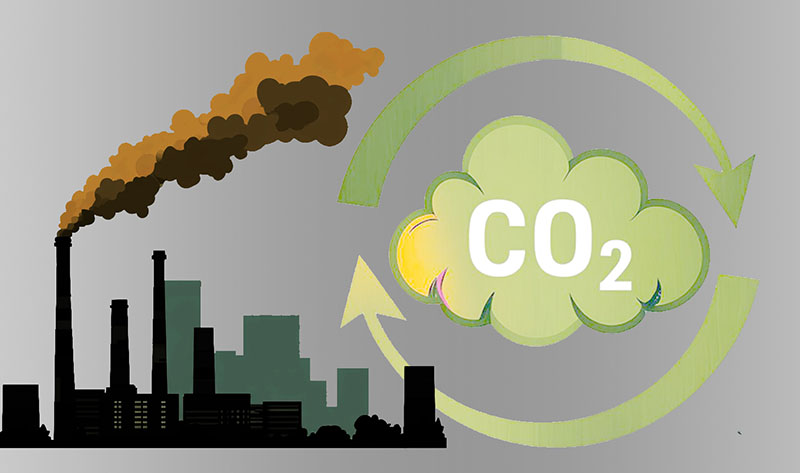

Flue gas primarily refers to the exhaust emissions from industrial sources such as power plants, boiler facilities, lime kilns, and cement plants. These gases typically contain 8–35% CO₂; if discharged directly without treatment, they would have a significant environmental impact.
Against the backdrop of global efforts to address climate change and promote sustainable development, effectively achieving carbon reduction and resource recycling has become a critical issue. Purifying CO₂ from flue gas represents a key technological pathway.
Flue gas CO₂ purification is the process of using technical methods to separate CO₂ from flue gas and remove impurities, thereby obtaining high-purity CO₂. The purified CO₂ can be reused as a resource, effectively reducing greenhouse gas emissions.
Benefits of Flue Gas CO₂ Purification
Lowering Carbon Trading Costs
Under carbon emissions trading systems, enterprises can reduce expenditures on purchasing allowances through capture and purification, or generate profit by selling surplus allowances.
Creating Economic Value
• Industrial Applications: CO₂ with ≥99.9% purity can be used for welding shielding gas, dry ice production, fire extinguishers, etc.
• Food Industry: Food-grade CO₂ meets needs such as beverage carbonation and food preservation.
• Energy Development: Injection into oil fields for enhanced oil recovery (EOR) increases recovery rates by 7–20%.
Waste Valorization
Converting CO₂ from flue gas into usable resources reduces waste gas treatment costs and fosters a circular economy model—for example, through applications like plant gas fertilization and fuel synthesis.
Three Methods for Flue Gas CO₂ Purification
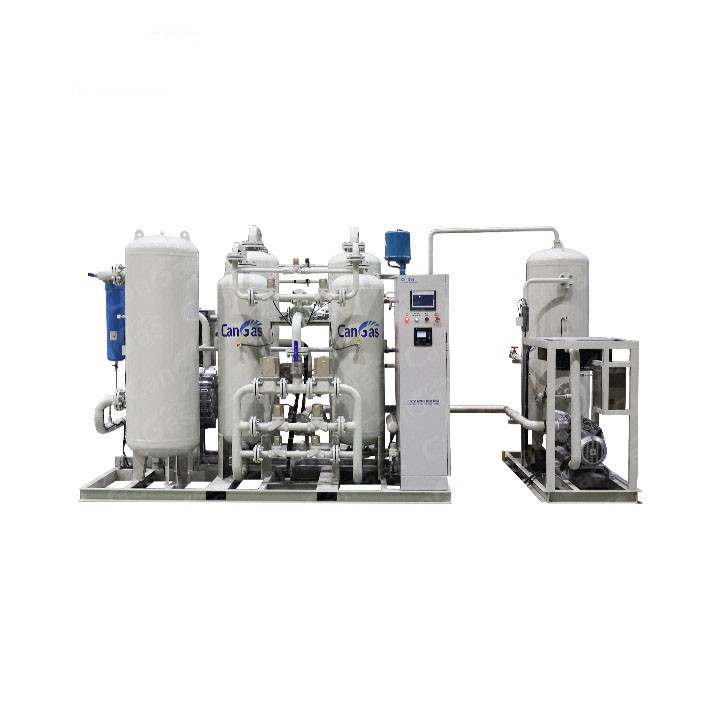
Pressure Swing Adsorption (PSA): This method utilizes adsorbents (such as molecular sieves) to selectively adsorb CO₂ under varying pressures—adsorbing at high pressure and desorbing at low pressure—to achieve CO₂ separation and enrichment.
Chemical Absorption Method: This process employs a chemical solvent (amine solution) that reacts with CO₂ to form an unstable salt:
R-NH₂ + CO₂ + H₂O ⇌ R-NH₃⁺ + HCO₃⁻
Subsequently, the reaction is reversed by raising the temperature, releasing the CO₂ and thereby achieving CO₂ capture and separation.
Cryogenic Fractionation Method: A separation technique that utilizes the differences in boiling points among the various components of the feed gas, achieving CO₂ separation through cryogenic condensation and rectification.
Forms and Applications of Purified Flue Gas CO₂
Purified, high-purity CO₂ has a wide range of applications, spanning everything from everyday beverages and chip manufacturing to cutting-edge carbon-neutrality technologies.
• Food Grade: Used in carbonated beverages, modified atmosphere packaging (MAP) for preservation, and refrigerated transport (using dry ice). Demand in this sector is stable, yet requirements regarding CO₂ purity and impurity levels are extremely high, adhering to strict standards.
• Industrial Grade: Used in welding (as a shielding gas), metal casting and processing (hardening), fire extinguishing agents, and enhanced oil recovery (EOR).
• Electronic Grade: Used in semiconductor manufacturing processes such as supercritical cleaning and oxidation/passivation; this grade demands extremely high levels of purity and strict control over trace impurities (e.g., moisture, hydrocarbons).
• Other Applications: Plant fertilization (CO₂ enrichment), wastewater treatment, synthetic fuel production, etc.
In fact, China has established relevant laws and regulations governing industrial waste gas (flue gas) emissions, encompassing general legal frameworks as well as industry-specific emission standards and management requirements. Enterprises that exceed emission limits face penalties, including production restrictions or shutdowns; furthermore, acts such as tampering with monitoring data or causing significant environmental pollution result in criminal liability in accordance with the law.