
From Gas Separation to Increased Crop Yields: CO₂ Purification Technology Drives Gas Fertilizer Applications
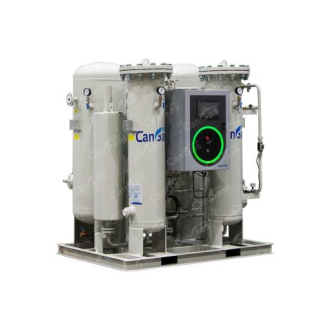
CO₂ purification technology is a specialized subset of gas separation technology. It involves using physical or chemical methods to isolate and purify CO₂ from mixed gas streams—such as industrial off-gases (e.g., power plant flue gas or steel mill exhaust), biomass fermentation gas, or associated natural gas—until the CO₂ meets specific application standards. Its core value lies in reducing carbon emissions and transforming CO₂ that would otherwise be released into the atmosphere into a usable raw material.
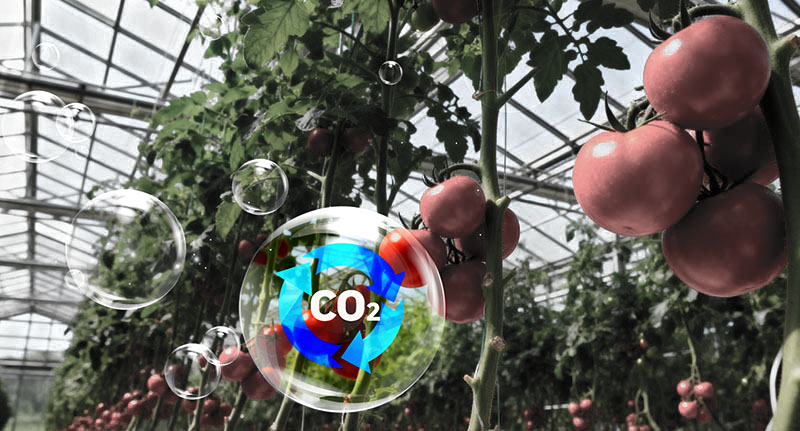
The application of CO₂ as a gas fertilizer involves supplying purified CO₂ directly to crops to significantly boost photosynthesis and growth. This technology is primarily used to address insufficient CO₂ levels in greenhouse cultivation; by artificially regulating CO₂ concentrations, growers can achieve simultaneous improvements in both crop yield and quality.
Benefits of CO₂ Purification Technology Driving Gas Fertilizer Applications
Combining CO₂ purification technology with gas fertilizer applications not only enables the resource utilization of CO₂ but also delivers significant benefits across agricultural production, environmental protection, and economic performance, as detailed below:
1. Significantly boosting crop yield and quality. Practical experience shows that the proper application of CO₂ gas fertilizer increases the yields of crops such as vegetables and fruits. It also enhances quality—for instance, by increasing sugar and vitamin content and reducing nitrate accumulation—thereby raising the commercial value of the produce.
2. Achieving a win-win for CO₂ emission reduction and environmental protection. Massive CO₂ emissions are a major driver of global warming; CO₂ purification technology allows for the recovery and reuse of industrial CO₂ emissions, thereby helping to meet "dual carbon" goals. Furthermore, the use of CO₂ gas fertilizer can reduce reliance on chemical fertilizers (as crops grow more robustly and require fewer chemical inputs), thereby mitigating soil and water pollution caused by fertilizer runoff and improving the agricultural ecological environment.
3. Lowering agricultural production costs and increasing cultivation profitability. On one hand, the comprehensive cost of using purified CO₂ as a fertilizer is lower than that of traditional chemical fertilizers. On the other hand, applying CO₂ fertilizer can shorten crop growth cycles (e.g., bringing vegetables to market 7–15 days earlier), increase planting turnover rates, and boost revenue per unit of time. Furthermore, in protected agriculture, CO₂ fertilization can be integrated with irrigation and fertilization systems, reducing labor input and further lowering costs.
4. Ensuring the stability and sustainability of agricultural production. In protected agriculture, the precise application of purified CO₂ fertilizer allows crops to maintain stable photosynthetic efficiency and enhanced stress resistance (such as cold and disease tolerance), unaffected by fluctuations in ambient CO₂ levels. Simultaneously, the model of recycling CO₂ as a resource facilitates agriculture's transition from reliance on chemical fertilizers to the use of green, circular nutrients, thereby enhancing sustainable development capabilities.
Precautions for CO₂ Fertilizer Application
• Concentration Control: Adopt scientifically appropriate CO₂ concentrations tailored to specific crops and growth stages; avoid excessive concentrations that could inhibit crop growth.
• Facility Sealing: Regularly maintain greenhouse films and repair any damage to ensure the structure remains well-sealed.
• Water-Fertilizer Synergy: When increasing CO₂ application, irrigation and fertilization plans must be adjusted accordingly to increase water and nutrient supply.
• Environmental Monitoring: Use CO₂ sensors to monitor concentration changes in real-time, preventing improper concentration levels and avoiding uneven gas diffusion caused by high temperatures and humidity within the greenhouse.
• Light Conditions: CO₂ supplementation should be performed when light intensity is sufficient; the effect is less effective under low-light conditions.
Successful Case Studies of CO₂ Fertilizer Application
The practical effectiveness of this technology has been verified in various locations across China; significant improvements in both yield and quality have been observed across a wide range of crops, from common vegetables to specialty agricultural products.
1. In a demonstration project in Shandong, a comparative trial was conducted using 14 greenhouses: seven received CO₂ fertilizer supplementation, while the other seven served as controls. Results showed that the application of CO₂ fertilizer increased the yield of pointed peppers by 2,437.5 kg per mu and raised the economic output by 6,964 yuan.
2. Research conducted by a laboratory in Guangdong on the local specialty Citrus reticulata 'Chachi' (the raw material for Xinhui dried tangerine peel) indicates that, compared to traditional cultivation methods, plants grown using gas fertilization flowered and fruited approximately one to two weeks earlier; yields of the fruit and peel increased by about 25% and 33%, respectively.
3. Data from a greenhouse experiment in Shaanxi show that dragon fruit plants in the test greenhouse flowered seven days earlier than those in the control greenhouse, with a 30% to 50% increase in the number of blossoms. Strawberries in the test greenhouse achieved an average sugar content of 12.4% (compared to 9.9% in the control group), showing marked improvements in taste and quality.